ABOUT THIS BLOG

I shall post videos, graphs, news stories, and other material there. We shall use some of this material in class, and you may review the rest at your convenience. You will all receive invitations to post to the blog. (Please let me know if you do not get such an invitation.) I encourage you to use the blog in these ways:
To post questions or comments about the readings before we discuss them in class;
To follow up on class discussions with additional comments or questions.
To post relevant news items or videos.

There are only two major limitations: no coarse language, and no derogatory comments about people at the Claremont Colleges.


Search This Blog

Tuesday, February 28, 2023

2023 Simulation Roster

 On the alternate timeline of simulation world, Joe Biden is still president but Republicans have a Senate majority. 

Health, Education, Labor, and Pensions

Republican

  • Bill Cassidy (LA), chair Nick Teresi
  • Rand Paul (KY) Auggie Aliaga
  • Susan Collins (ME) Lexi Punishill
  • Lisa Murkowski (AK) Sammy Moore-Thomson
  • Mitt Romney (UT) Yulissa Sanchez
  • Mitch McConnell (KY)* Isaiah Escobar

Democratic
  • Bernie Sanders (VT), RMM  Sritha Chadalavada
  • Patty Murray (WA) Jacey Carter
  • Tammy Baldwin (WI) Kara Cato
  • Maggie Hassan (NH) Ella Eichberg

    Judiciary

    Republican
    • Chuck Grassley (IA), chair Maryum Khwaja
    • Ted Cruz (TX) Olivia Carusi
    • Lindsey Graham (SC) Shay Suresh
    • Marsha Blackburn (TN) Olivia Licata
    • Mike Lee (UT) Adam Alamy

      Democrat
      • Dick Durbin (IL), RMM  Bhanu Cheepurupalli
      • Cory Booker (NJ) Maeve Conte
      • Alex Padilla (CA) Stella Cheng
      • Chuck Schumer (NY)* Caroline Bullock

      *Added for simulation purposes

      Political Deals I

      Subminimum wage bill (S 533)


      Conditions for Deliberative Negotiation (Lawrence, p. 14)


      Crisis and Scandal as a Prod to Action


      Sanders and McCain find a deal

      Bernie Sanders and John McCain

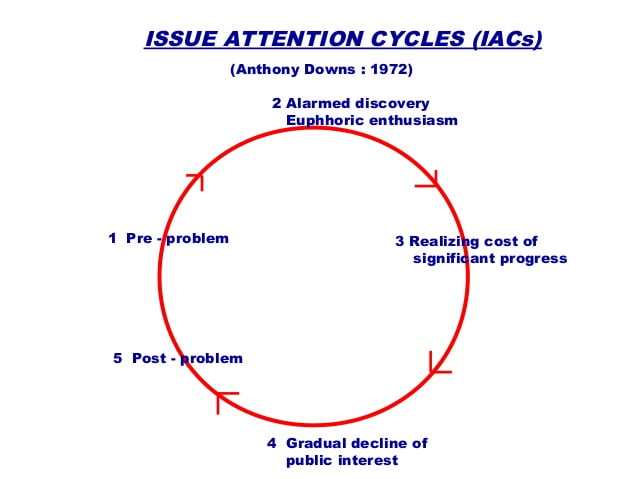
      Policy Windows and  The Issue-Attention Cycle


      Image result for issue-attention cycle


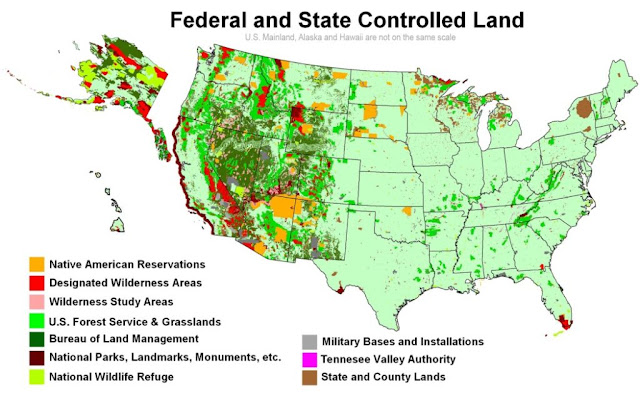
      Public Lands Case Study


       Image result for public lands forests map


      A couple of quotations about Congress and life in general:
      • "At some point somebody has to decide, let's do it the old-fashioned way, which is `one thing I hate for one thing I love.'" (Lawrence, p. 39)
      • "Here's a list of what we have to have. Here's a list of the ones we really, really hate. Here's a list of `if you put this language on page 4 we could swallow it.' And then you work that list." (Lawrence, pp. 40-41).


        The 2014 farm bill and the "dairy cliff" penalty default (Lawrence, p. 51)


        Thursday, February 23, 2023

        Interest Groups and Congress

        For Tuesday, read Lawrence, all (it is a short book) and bring it to class.

        Russian influence
        Interest group ratings

        Simulation Roles

        On the alternate timeline of simulation world, Joe Biden is still president but Republicans have a Senate majority. 

        Health, Education, Labor, and Pensions

        Republican

        • Bill Cassidy (LA), chair
        • Rand Paul (KY)
        • Susan Collins (ME)
        • Lisa Murkowski (AK)
        • Mitt Romney (UT)
        • Mitch McConnell (KY)*

        Democratic
        • Bernie Sanders (VT), RMM
        • Patty Murray (WA)
        • Tammy Baldwin (WI)
        • Maggie Hassan (NH)

          Judiciary

          Republican
          • Chuck Grassley (IA), chair
          • Ted Cruz (TX)
          • Lindsey Graham (SC)
          • Marsha Blackburn (TN)
          • Mike Lee (UT)

            Democrat
            • Dick Durbin (IL), RMM
            • Cory Booker (NJ)
            • Alex Padilla (CA)
            • Chuck Schumer (NY)*

            *Added for simulation purposes


            Tuesday, February 21, 2023

            Writing Advice from a Los Angeles Times Columnist


            Decisions

            For Wednesday, Davidson, ch. 13.

            Questions on paper?  Comments on papers:  SW= page numbers in Strunk and White.

            The winners

            Reviewing Variations of Lawmaking
            Vote-a-Rama
            Rule XIV of the Senate:
            The Senate’s standing committees play an essential part in the legislative process, as they select the small percentage of the bills introduced each Congress that, in their judgment, deserve the attention of the Senate as a whole, and as they recommend amendments to these bills based on their expert knowledge and experience. Most bills are routinely referred to the committee with appropriate jurisdiction as soon as they are introduced. However, paragraph 4 of Rule XIV permits a Senator to bypass a committee referral and have the bill placed directly on the Calendar of Business, with exactly the same formal status the bill would have if it had been considered and reported by a Senate committee.

            Mr. MCCONNELL. Mr. President, I understand that there is a bill at the desk, and I ask for its first reading.

            The PRESIDING OFFICER. The clerk will read the bill by title for the first time.

            The senior assistant legislative clerk read as follows:

            A bill (S. 1035) to extend authority relating to roving surveillance, access to business records, and individual terrorists as agents of foreign powers under the Foreign Intelligence Surveillance Act of 1978 and for other purposes.

            Mr. MCCONNELL. I now ask for a second reading and, in order to place the bill on the calendar under the provisions of rule XIV, I object to my own request.

            The PRESIDING OFFICER. Objection having been heard, the bill will be read for the second time on the next legislative day.2

            Hotlining -- a 2019 example
            Earmarking and Phonemarking
            BTU'd
            Alternative to conference: "message between houses" or Ping-ponging


            Individual Decisions
            Specialization and the importance of biography (Davidson, p. 247)

            Timing


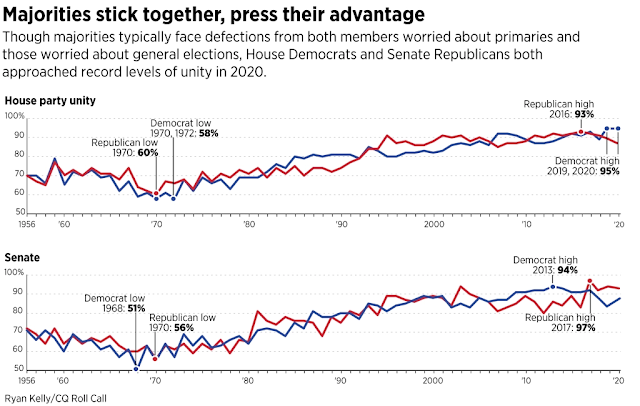
            Party Unity (Davidson p. 276). TO ANALYZE A ROLL-CALL VOTE, LOOK AT THE EXCEPTIONS: THE MEMBERS WHO BROKE PARTY RANKS.

            Marshall Bessey thesis on the impeachment Republicans


            DO NOT TRY TO REDUCE ROLL CALL VOTES TO CAMPAIGN CONTRIBUTIONS. Consider primary and general election constituencies.


            Voting in 2021 (From Roll Call )


            History and DW-Nominate (Davidson 283)


            This measurement is extremely influential in political science.


            It is also extremely flawed.


            Bargaining and cues


            Cosponsorship and Dear Colleague

            Thursday, February 16, 2023

            Process


            Simulation issues and committees?

            For next Tuesday, Davidson, ch. 9

            • Open, Closed, Structured rules

            The Basic Amendment Tree, Senate Version 

            A CRS report on Senate amendments:
            Senate precedents set out three principles of precedence among amendments that are directed to the same text: 
            1. A second-degree amendment has precedence over a first-degree amendment;
            2. A motion to insert and a motion to strike out and insert have precedence over a motion to strike out; and
            3. A perfecting amendment (and an amendment to it) has precedence over a substitute amendment (and an amendment to it). 
            The first of these principles is axiomatic. A second-degree amendment is an amendment to a first degree amendment, and it must be offered while the first-degree amendment is pending—that is, after the first-degree amendment has been offered but before the Senate has disposed of it. The Senate also acts on an amendment to a first-degree amendment before it acts on the first-degree amendment itself. So this principle conforms to Senate practice under both meanings of precedence.
            It may be helpful in understanding the second two principles to think about decisions the Senate needs to make about a text. Changing the text of an amendment, through a second-degree amendment, could “cure” a problem Senators may have had with the amendment’s original language. That could obviate the need to strike out the text 

            Senate Procedure and Rule XIV  "I object to my own request"
            Therefore, through objection, a bill after two readings is prevented from being referred to committee and is placed directly on the Senate’s Calendar of Business. It is usually the majority leader (or a Senator acting in the majority leader’s stead), acting on his own or at the request of any other Senator, who objects to “further proceeding”—committee referral—on a measure.


            How Mitch filled the tree 

            Just prior to Senate approval of S.Res. 27, the majority and minority leaders engaged in a colloquy on the floor to share additional information regarding their intentions for floor operations in the 117th Congress. ... The colloquy concerned two Senate practices that have become more common in recent Congresses. First, it has become common for the majority leader to “fill the amendment tree,” a process that temporarily blocks other Senators from offering amendments, except by unanimous consent. ... Regarding the amendment process, the majority leader announced in the colloquy: "I am a strong supporter of the right of Senators to offer amendments and commit to increase
            dramatically the number of Member-initiated amendments offered in the 117thCongress. I am also opposed to limiting amendments by “filling the tree” unless dilatory measures
            prevent the Senate from taking action and leave no alternative."
             
              Other processes


              Blog Archive