This blog serves my Congress course (Claremont McKenna College Government 101) for the spring of 2026.
ABOUT THIS BLOG
I shall post videos, graphs, news stories, and other material there. We shall use some of this material in class, and you may review the rest at your convenience. You will all receive invitations to post to the blog. (Please let me know if you do not get such an invitation.) I encourage you to use the blog in these ways:
To post questions or comments about the readings before we discuss them in class; To follow up on class discussions with additional comments or questions. To post relevant news items or videos.
There are only two major limitations: no coarse language, and no derogatory comments about people at the Claremont Colleges.
In all bodies, those who will lead, must also, in a considerable degree, follow. They must conform their propositions to the taste, talent, and disposition, of those whom they wish to conduct: therefore, if an assembly is viciously or feebly composed in a very great part of it, nothing but such a supreme degree of virtue as very rarely appears in the world, and for that reason cannot enter into calculation, will prevent the men of talent disseminated through it from becoming only the expert instruments of absurd projects!
Rep. Marjorie Taylor Greene tells Alex Jones that masks and vaccines don't work and that any doctor who doesn't use Ivermectin to treat COVID-19 is "guilty of murder." pic.twitter.com/mqV5NU9BkP
Remember for the assignment: Do not rely only on member websites: search for interviews
The Almanac of American Politics 2022 does not have the latest data on House districts. The lines may have changed and members might now represent districts with different numbers.
Here's an e-Dear Colleague written by Speaker Johnson where he says that the potential Senate border compromise bill would be "dead on arrival" in the House.
"All of American history comes from the Civil War. It is the most important event in our history. Everything before it led up to it, everything since, everything, is a consequence of it." -- Ken Burns
From Article I, section 2
Representatives and direct Taxes shall be apportioned among the several States which may be included within this Union, according to their respective Numbers, which shall be determined by adding to the whole Number of free Persons, including those bound to Service for a Term of Years, and excluding Indians not taxed, three fifths of all other Persons.
The radical vice of Article I as drafted and ratified was that it gave slaveholding regions extra clout in every election as far as the eye could see - a political gift that kept giving. And growing. Unconstrained by any explicit intrastate equality norm in Article I, and emboldened by the federal [3/5] ratio, many slave states in the antebellum era skewed their congressional-district maps in favor of slaveholding regions within the state. Thus the House not only leaned south, but also within coastal slave states bent east, toward tidewater plantations that grabbed more than their fair share of seats. ... The very foundation of the Constitution’s first branch was tilted and rotten.
And not just the first branch. The Article II electoral college sat atop the Article I base: The electors who picked the president would be apportioned according to the number of seats a state had in the House and Senate. In turn, presidents would nominate cabinet heads, Supreme Court justices, and other Article III judges.
Consequences of the Three-Fifths Clause. From William Lee Miller, Arguing About Slavery:
Five of the first seven presidents were slaveholders [Washington, Jefferson, Madison, Monroe, Jackson], for thirty-two of the nation’s first thirty-six years forty of its first forty-eight, fifty of its first sixty four, the nation’s president was a slaveholder. The powerful office of Speaker of the House was held by a slaveholder for twenty-eight of the nation’s first thirty-five years. The president pro tem of the Senate was virtually always a slaveholder. The majority of the cabinet members and — very important — of justices of the Supreme Court were slaveholders. The slaveholding Chief Justice Roger Taney, appointed by slaveholding President Andrew Jackson to succeed the slaveholding John Marshall, would serve all the way through the decades before the war into the years of the Civil War itself; it would be a radical change of the kind slaveholders feared when in 1863, President Lincoln would appoint the anti-slavery politician Salmon P. Chase of Ohio to succeed Taney.
New States may be admitted by the Congress into this Union; but no new States shall be formed or erected within the jurisdiction of any other State; nor any State be formed by the Junction of two or more States, or parts of States, without the Consent of the Legislatures of the States concerned as well as of the Congress
That’s right. All it takes to create a new state is the passage of a federal law. Right now, assuming they were willing to use the nuclear option to abolish the filibuster for state admissions, any unified government could make Puerto Rico or DC a state, or (with the consent of the state leg) divide Texas (or Wyoming) into any number of states. WIth just a law. Irreversibly. And the constitution puts no population or land size constraints on the process either.
These three features of the statehood process—irreversibility, a low threshold for creation, and no population/size constraints on the creation of a state—made the statehood process incredibly destabilzing in the 19th century. Any majority, at any time, could rearrange the balance of power in the legislature and the electoral college. And it unambiguously exacerbated the slave crisis: so many of the major flashpoints over slavery between 1820 and 1860 involved the flawed statehood process: the Missouri Compromise, the Compromise of 1850, the Kansas-Nebraska Act, the Lecompton Constitution fight, even the Dred Scott decision.
"Well-bounded": Membership and leadership in the House has been increasingly walled-off. Incumbents tend to serve longer and leadership positions go to the most senior incumbents
"Internally complex": House functions have been regularized and specialized: committees, leadership, staff.
Universalistic: The House now follows impersonal, universal decision criteria rather than particularistic criteria. "Precedents and rules are followed; merit systems replace favoritism and nepotism" (p 145) When the House makes a judgment about a contested election, the decision rests on the case's merits, not on partisan lines.
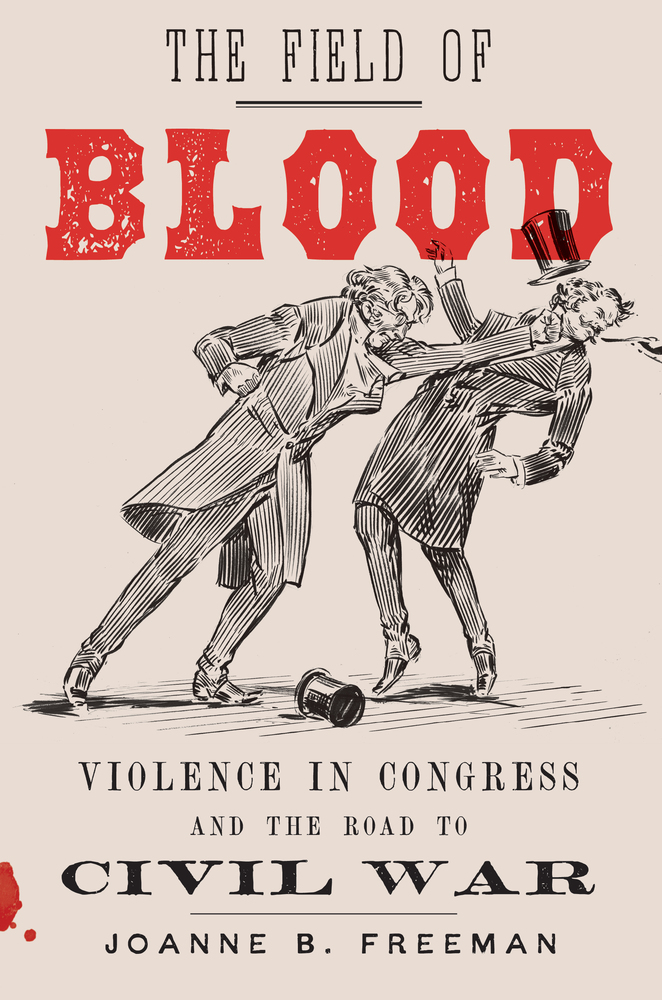
The title comes from this line, which provides the book's epigraph: In a letter to Senator Charles Sumner (MA) Rev. John Turner Sargent wrote that "blood would flow—somebody’s blood, either yours or Wilson’s, or Hale’s, or Giddings’— before the expiration of your present session on that field of blood, the floor of Congress.”
Sargent was alluding to the burial place of Judas: "And the chief priests took the silver pieces, and said, It is not lawful for to put them into the treasury, because it is the price of blood. And they took counsel, and bought with them the potter's field, to bury strangers in. Wherefore that field was called, The field of blood, unto this day" (Matthew 27:6-8 KJV).
It was literally an atmosphere conducive to violence:
All this in a room that was hot, stuffy, and smelly. At the end of a typical day, with the galleries full and hours of body heat trapped in the chamber, [Benjamin Brown] French thought that reading aloud to members was like reading “with his head stuck into an oven.” ... Ongoing whimpering from the floor produced another study, this one demonstrating that it was thirty degrees warmer inside than outside and that the chamber smelled of sewage from the basement. Visiting the new chamber not long after it opened, French wasn’t impressed. The idea of “shutting up a thousand or two people in a kind of cellar, where none of God’s direct light or air can come in to them . . . does not jump with my notions of living,” he groused. Thirty years later, members still declared the House “the worst ventilated building on the continent."
Professor Freeman explains how hard it was to research the violence (Start at around 9:30):
In 1856, Senator Sumner delivered his famous "Crime Against Kansas" speech. He attacked the absent Andrew Butler (SC), saying he had " a mistress . . . who, though ugly to others, is always lovely to him; though polluted in the sight of the world, is chaste in his sight—I mean," the harlot, Slavery."
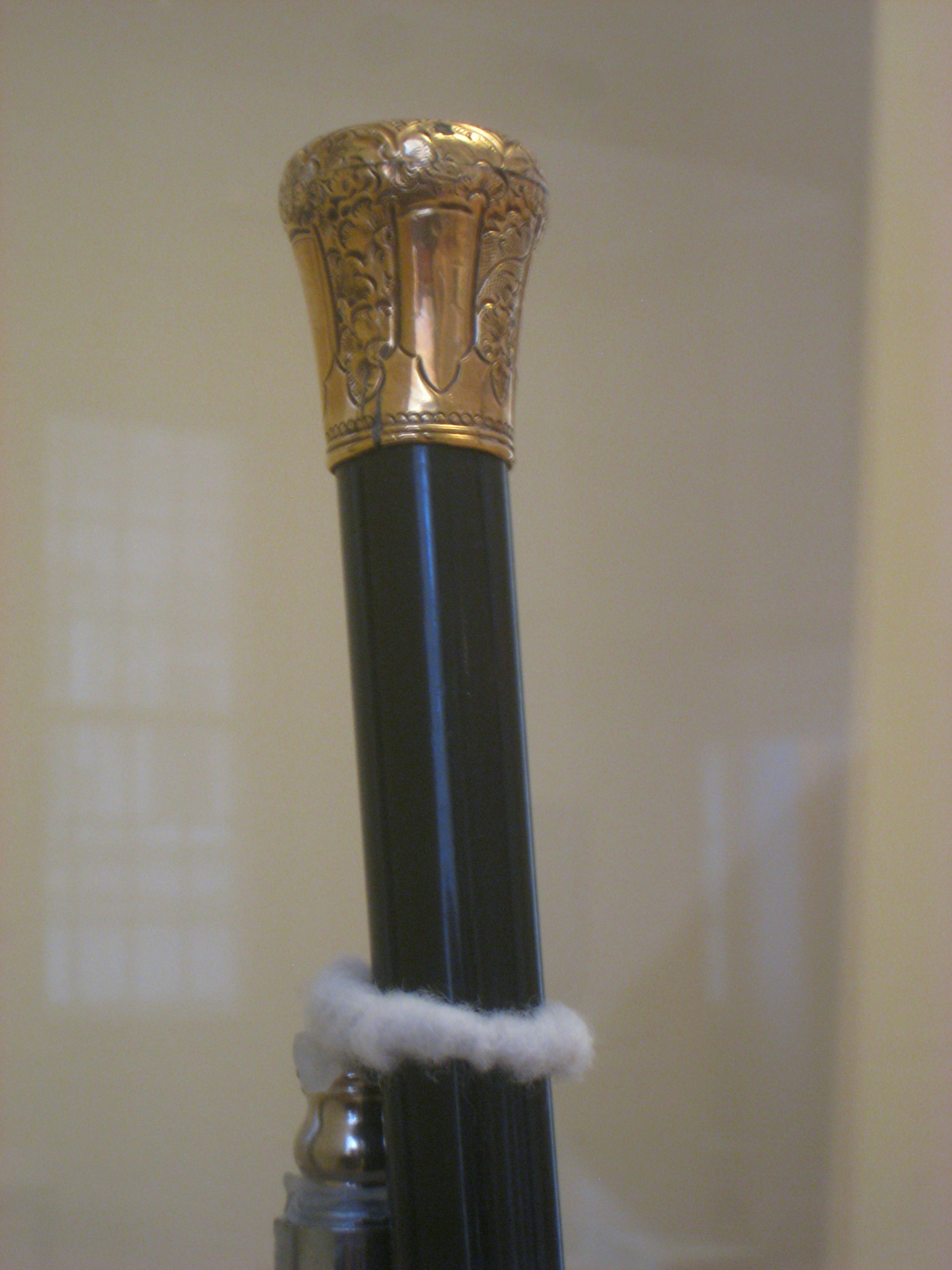
Two days later, Butler's cousin, Representative Preston Brooks of South Carolina, responded:
The President pushed the claim that Pennsylvania had reported 205,000 more votes than there were voters in the state.“We’ll look at whether we have more ballots in Pennsylvania than registered voters,” Acting Attorney General Rosen replied, according to [acting deputy attorney general Richard] Donoghue. They “[s]hould be able to check that out quickly.” But Rosen wanted President Trump to “understand that the DOJ can’t and won’t snap its fingers and change the outcome of the election. It doesn’t work that way.”
“I don’t expect you to do that,” President Trump responded. “Just say the election was corrupt and leave the rest to me and the Republican Congressmen."
Donoghue explained this “is an exact quote from the President.”
When he gets to Arizona, he announces that he has multiple slates of electors, and so is going to defer decision on that until finishing the other States.
At the end, he announces that because of the ongoing disputes in the 7 States, there are no electors that can be deemed validly appointed in those States. That means the total number of “electors appointed” – the language of the 12th Amendment -- is 454. ... A “majority of the electors appointed” would therefore be 228. There are at this point 232 votes for Trump, 222 votes for Biden. Pence then gavels President Trump as re-elected.
Howls, of course, from the Democrats, who now claim, contrary to Tribe’s prior position, that 270 is required. So Pence says, fine. Pursuant to the 12th Amendment, no candidate has achieved the necessary majority. That sends the matter to the House, where the “the votes shall be taken by states, the representation from each state having one vote . . . .” Republicans currently control 26 of the state delegations, the bare majority needed to win that vote. President Trump is re-elected there as well.
Hey everyone - I just read this article about the Senate Border-Ukraine (and Israel and Taiwan) deal (which was mentioned in class yesterday). The article mainly focuses on how there is no CHC representation in these negotiations and the implications of this omission. It also talks about how the deal is likely to face opposition in the House from CHC members as well as hard-line Republicans who will not vote for funding Ukraine (if Speaker Johnson even brings it to the floor). The article did not explicitly mention the lack of representation from border states in the negotiations, with the talks being led by Sen. Murphy (D-CT) and Sen. Lankford (R-OK). The only Senator mentioned as involved in the talks who is from a border state is Kyrsten Sinema (I-AZ). I think this connects well to our discussion of how there are "two Congresses," with a deal with national implications being driven by Senators whose constituencies are not those most directly affected (I hope I used the right word here, don't want to make a dumb-you-know-what mistake)!


.png)