ABOUT THIS BLOG

I shall post videos, graphs, news stories, and other material there. We shall use some of this material in class, and you may review the rest at your convenience. You will all receive invitations to post to the blog. (Please let me know if you do not get such an invitation.) I encourage you to use the blog in these ways:
To post questions or comments about the readings before we discuss them in class;
To follow up on class discussions with additional comments or questions.
To post relevant news items or videos.

There are only two major limitations: no coarse language, and no derogatory comments about people at the Claremont Colleges.


Search This Blog

Thursday, April 20, 2023

Congress and Domestic Policy

Questions on the assignment?

Note:  the term is cosponsor, not co-sign

For next time:

  • Davidson, ch. 15
  • Thurber, ch. 9.

Distributive Policies (Davidson, 410-412)

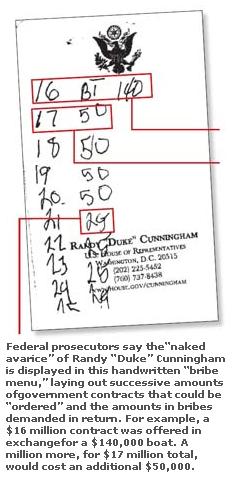
Earmarks and scandal (Davidson 411)


John Hudak at Brookings:
The removal of congressional earmarking does not make earmarking going away. It simply transfers that power and that practice from the legislative branch to the executive branch. Presidents—and their appointees—engage in pork-barrel politicking (earmarking) in the same way Congress does. Reforming the process in Congress by curtailing the practice of earmarking simply shifts that power more explicitly to a president and a cadre of unelected bureaucrats in government. Eliminating earmarking is a serious abdication of power by Congress which empowers a branch of government beyond what the Founders intended.
Regulatory Politics


The cost of regulation (See Thurber, pp. 250-251)


Redistributive Politics


Social Insurance (Theodore Marmor):
Social insurance, like commercial insurance, is about protection against financial risk. It is “insurance” in the sense that people contribute to a fund to protect themselves against unpredictable financial risks. These include outliving one’s savings in old age, the early death of a breadwinner, the onset of a disability that makes work difficult if not impossible, the high costs of acute illness, involuntary unemployment, and work-related injury. Yet unlike with commercial insurance, contributions are not prices in a market and thus do not depend on the contributor’s risk profile (unless commercial regulations say otherwise, in essence creating “social” insurance through the backdoor). Instead of a contract between an enrollee and an insurer, social insurance is a system of shared protection among the insured, most comparable to mutual insurance in the commercial realm, with contributions made in proportion to one’s market income. In social insurance, the “insurer”—whether a government agency or a corporate body with a joint labor-management board—is the agent of the contributing enrollees. And unlike commercial insurance, the social insurance “contract” mandates participation by law, since otherwise adverse selection would cause its unraveling.
Poverty Rate by Age

................Children............65+

1959............26.9.............35.2
1969............13.8.............25.3
1979............16.0.............15.2
1989............19.0.............11.4
1999............16.6.............09.7
2009............20.1.............08.9
2019............14.1.............08.9


Credit Social Security for the decline in elder poverty

See how different the figures would be:


Last Paper, Spring 2023

 Answer one of the following:

  • The authors of Congress and Its Members finished writing the 18th edition in mid-2021. Pick any chapter in the book and write a three-page update. What events of the past two years should materially change their analysis when they write the 19th edition?
  • Pick either Kevin McCarthy or Hakeem Jeffries.  What practical, politically feasible steps can he take to prevent a default this summer?  Pose the question to ChatGPT, and explain why its answer is, at best, superficial.  (Trust me, it will be.) Go beyond it, apply what you have learned in the class, and give a more sophisticated answer. In other words: "And then what are you prepared to do?"
  • Consider one of the following laws.  Ask ChatGPT if Congress should amend it and if so, how.  Analyze the answer.  What additional details would make the case stronger?  Is the AI chatbot botching or missing important information? 
    1. War Powers Act of 1973
    2. Congressional Budget & Impoundment Control Act of 1974
    3. The Homeland Security Act of 2002

In your answer, give careful consideration to alternative perspectives.

You may also write on a relevant topic of your choice, subject to my approval.
  • Essays should be typed (12-point), double-spaced, and no more than three pages long. I will not read past the third page.  (If you choose the second or third option, include a copy of the ChatGPT answer, which will not count against the page limit.)
  • Submit papers as Word documents, not Google docs or pdfs.
  • Cite your sources. Use Turabian/Chicago endnotes.
  • Watch your spelling, grammar, diction, and punctuation. Errors will count against you.
  • Graduating seniors should return papers to the Sakai dropbox for this class by 11:59 PM, Wednesday, May 3. All others should return papers by 11:59 PM, Friday, May 5.

Tuesday, April 18, 2023

Congress and Economic Policy

For Thursday, Thurber, ch. 11

Constitutional Provisions


All Bills for raising Revenue shall originate in the House of Representatives; but the Senate may propose or concur with amendments as on other Bills.”
— U.S. Constitution, Article I, section 7, clause 1


To raise and support Armies, but no Appropriation of Money to that Use shall be for a longer Term than two Years;
-- U.S. Constitution, Article I, section 8, clause 12

“No Money shall be drawn from the Treasury, but in Consequence of Appropriations made by Law; and a regular Statement and Account of the Receipts and Expenditures of all public Money shall be published from time to time.”
— U.S. Constitution, Article I, section 9, clause 7

What follows would baffle a Martian.

Authorization
  • Reauthorization as a form of oversight
  • Lapsed authorizations:

Appropriation
  • Also a form of oversight 


"The Budget Process" and key documents:

Revenue Bills and RECONCILIATION (Davidson 429-430)

Revenues -- Where the money comes from:

Revenues, by Category

Percentage of Gross Domestic Product


The federal tax system is more progressive than most people realize


Average Federal Tax Rates, by Income Group, 1979 to 2019


Average Federal Tax Rates, by Tax Source, 2019

Percent


Tax expenditures

Outlays -- Where the money goes:


Outlays, by Category

Percentage of GDP


Budget tables:  function, subfunction, agency


  What happens if the US government defaults on the federal debt?


Thursday, April 13, 2023

Congress and Judicial Politics

In the news?  

For next Tuesday

  • Davidson, ch. 14, Thurber ch. 11.

For next week:  

  • What domestic topics do you want to discuss
  • Overall, any topics to revisit or add?
  • Topics for last paper?

Finishing last time: J6

Court-packing  (Davidson 367-368).

A check on the court:  jurisdiction-stripping, or court-stripping (Davidson 365-366 -- a 2020 article

Constitutional Amendments

Response to statutory (vs. constitutional) interpretation (Davidson p. 363)  Lilly Ledbetter Fair Pay Act and ADA

Supreme Court Nominations (see Thurber 171-178)

Clarence Thomas:


In hearings, senators try to get judicial nominees on the record.  NOTE WHAT ALITO SAYS (START AT 18:45) ABOUT STARE DECISIS.


Merrick Garland and "the Biden Rule" (Thurber,  p, 168)

Gorsuch and the nuclear option 

Tuesday, April 11, 2023

Executive Actions, and Congressional Actions in the Public Sphere

For Thursday, Thurber, chapter 8.

 Biden on guns

Actions in the Public Sphere: moves by members of Congress that catch the attention of alert publics.  Besides legislation (duh), the moves could include:


Key hearings


Thursday, April 6, 2023

Congress and the Executive IV

For next Tuesday, Davidson, ch. 12, Thurber ch. 5.  

For next Thursday, Thurber, ch. 8.

WHAT IF TRUMP WIN THE PRESIDENCY AND GOES TO PRISON?

Some Review:

Unilateral action

NAIL: Nominations, Appropriations, Investigations, Legislation


Nominations 


Appropriations
Legislation: Executive Branch Organization and Laws on Reporting


Biden


Tuesday, April 4, 2023

Debrief, Congress and the Executive III

For next time, Thurber, ch. 6.

LARP v IRL

  • Compressed time
  • No dilatory tactics
  • No press, public, staff, House, or SCOTUS
  • Limited role of POTUS (see below)
  • Inherent limitations of simulation
But role-play is still powerful

Presidents and closing the deal (Thurber, ch. 15)

Review from March 7

Vetoes (Davidson 300-303).  Biden has not vetoed any bills yet.


1— Strongly Support Passage
2— Support Passage
3— Do not Object to Passage
4— No Position on Passage
5— Oppose
6— Strongly Oppose
7— Secretary’s Veto Threat (single and multiple agency)
8— Senior Advisor’s Veto Threat
9— Presidential Veto Threat

Why presidents can make deals (320-321)
  • Breaking stalemate
  • Horse-trading
  • Concessions BBB becomes IRA
  • NOT going public
  • Sticking to the terms of debate
  • Knowledge of Congress and policy
Slightly out of order, but in light of today's events

The Founders knew about the possibility of crooked presidents:

Article I, Section 3, Clause 7:

Judgment in Cases of Impeachment shall not extend further than to removal from Office, and disqualification to hold and enjoy any Office of honor, Trust or Profit under the United States: but the Party convicted shall nevertheless be liable and subject to Indictment, Trial, Judgment and Punishment, according to Law.

Alexander Hamilton (in Federalist No. 72) 
An avaricious man, who might happen to fill the office, looking forward to … yield[ing] up the emoluments he enjoyed … might not scruple to have recourse to the most corrupt expedients.

An ambitious man, too, when … seated on the summit of his country’s honors, … would be … violently tempted to embrace a favorable conjuncture for attempting the prolongation of his power, at every personal hazard.


The House
  • "Due process" does not apply.  
  • The Fifth Amendment says no person shall "be deprived of life, liberty, or property, without due process of law." Impeachment merely removes a person from office.
The Senate

The Grounds

The Special Case of the President


Blog Archive