ABOUT THIS BLOG

I shall post videos, graphs, news stories, and other material there. We shall use some of this material in class, and you may review the rest at your convenience. You will all receive invitations to post to the blog. (Please let me know if you do not get such an invitation.) I encourage you to use the blog in these ways:
To post questions or comments about the readings before we discuss them in class;
To follow up on class discussions with additional comments or questions.
To post relevant news items or videos.

There are only two major limitations: no coarse language, and no derogatory comments about people at the Claremont Colleges.


Search This Blog

Tuesday, February 15, 2022

Staff

For Thursday, LaPira, ch. 13

An office:


  • House: Since 1975, the House has capped full-time staff working in a Member’s office at 18 permanent employees; in 1979 it authorized up to four FTEs who may work part-time.
  • Senate: No cap on headcount, but allowance varies from $2.8 m for a Senator representing a state with a population under 5 million to $4.5 m for a Senator representing a state with a population of 28 million or more.
  • Video on the differences

Committee and personal staff: who knows more?


Support agencies

That environment changed abruptly in 2006. That year, Louis Fisher made comments to a reporter about the limitations of the whistle-blower protection law. It ought to have been a shrug-worthy comment, especially as the facts indicated that agencies defeated whistle-blowers in court almost every time. But someone in Congress took offense and complained. A media circus ensued, and the Internet lit up with anger. In the end, the agency transferred Fisher out of his job and into another agency within the Library of Congress. We had lost a valuable and productive colleague. Congressional requests that would have gone to him were routed to others at the CRS with much less experience.

The CRS’s blood was in the water, and more attacks came. Many of us were particularly shocked when Michigan Representative Pete Hoekstra, then chairman of the House Select Committee on Intelligence, rebuked the agency. A CRS expert had written a confidential memorandum on wiretapping, concluding that the executive branch probably had not given Congress as much notification as the law required. Hoekstra told the CRS that it had no business writing about the topic. It was remarkable: the CRS’s expert had warned Congress that the executive branch might be taking advantage of the legislature, and a powerful member of Congress had essentially replied, “Shut up.”
Rewind:  Centralization


"Unorthodox" development and management of bills (LaPira 228-231).

Bipartisanship and legislative productivity


Second Assignment, Spring 2022

CHOOSE ONE:

1. Pick any bill from the 116th (2019-2020) or 117th (2021-2022) Congress. Explain its fate. Instead of giving a mere chronology, tell why the measure moved or stalled. What happened to previous versions? Which groups or blocs backed and fought it?  Did the administration take a position? Which strategies and tactics did its friends and foes use? Even if it failed or stalled, did it prompt the passage of a similar measure in a different form? Look at parliamentary strategies, major amendments, and roll calls. Again, you should explain the outcome, not just describe the process.  Some possible topics:

From 117th Congress:

From 116th Congress:


2. Analyze a proposed reform of congressional procedure. Carefully explain arguments for and against the reform. Would it achieve its goal? Would it improve the operation of Congress? (The two questions are not necessarily the same.)  See recent action and proposals from the Select Committee on the Modernization of Congress.

 The Congressional Institute lists some ideas.  So does APSA, with contributions from Prof. Kathryn Pearson, an alum of this course.

3. Pick pending legislation that has not yet passed either house. Write a memo to its prime sponsor detailing a plausible strategy for securing its passage at least in one chamber. In your answer, consider all phases of the legislative process and take account of the influence of interest groups and the administration.

Get background from a source such as CQ Magazine where you may find the partisan breakdown of roll-call votes. .

Other possible sources include:
-------------------------------------------------------------------------------------------------------------------

  • Essays should be typed, double-spaced, and no more than five pages long. I will not read past the fifth page. 
  • Submit papers as Word documents, not pdfs or Google docs.
  • Cite your sources with endnotes in standard Turabian format. Endnote pages do not count against the page limit.
  • Watch your spelling, grammar, diction, and punctuation. Errors will count against you. Return essays (as Word documents, not pdfs) to the Sakai dropbox by 11:59 PM, Friday, March 4. I reserve the right to dock papers will one gradepoint for one day’s lateness, a full letter grade after that.

Wednesday, February 9, 2022

Congressional Parties and Leadership II

For Tuesday, LaPira, ch. 5, 6, 8.

Speakership Elections -- and more from Matt Glassman


Note:  even majorities of the president's party may split with the administration agenda.  See Democrats on trade in 1993 and 2014.

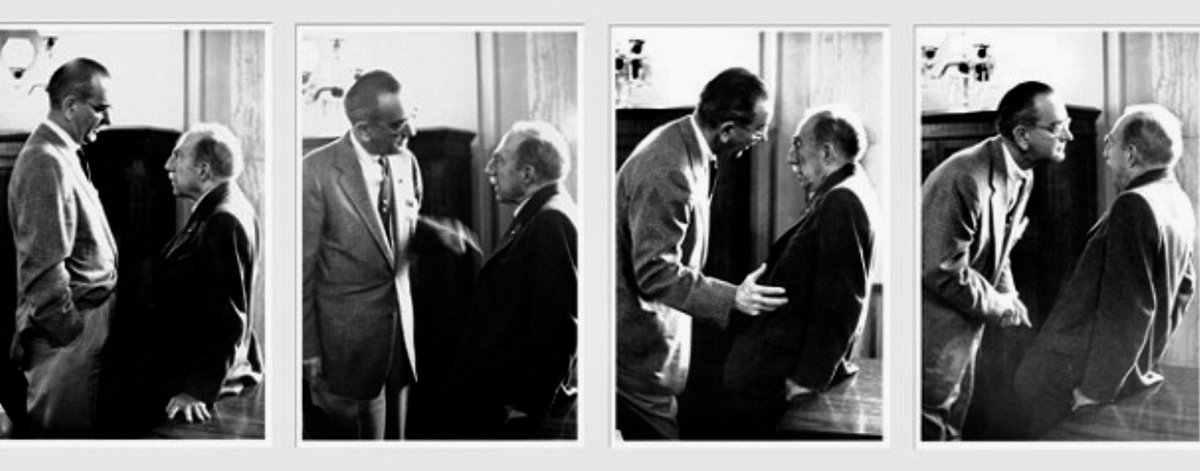
LBJ

Caro on LBJ, the House, and the Senate
For eleven years, however, Lyndon Johnson had been trapped in a body so large that he couldn’t work in small groups, much less one on one. Everything in the House of Representatives was done en masse, from the swearing-in by the Speaker at the opening of each Congress—where all 435 members, crowded together on the long benches in the House Chamber, stood up together, raised their hands and repeated the words of the oath in unison, as if they were a group of draftees being inducted into the Army—to committee meetings: each House committee was a substantial body in itself; on the House Armed Services Committee Johnson had been one of thirty-six members, so many that at meetings they had to sit on a long dais in two tiers. With its hundreds of members, its crowded, noisy corridors and cloakrooms, with its strict formal rules and leadership structure made necessary by its size, the House was an environment in which, as one observer put it, members “could be dealt with only in bodies and droves.”

The Senate was very different. With fewer than a hundred members, it was less than a quarter of the size of the House, a much more personal, more intimate, body, one in which, as a commentator puts it, “most interactions were face to face.” The great reader of men would have to read only a relatively small number of texts. Furthermore, because of the longer senatorial terms, those texts would not be constantly changing as they were in the House. They could be perused at length, pored over; studied and restudied. What text could, under such favorable circumstances, remain impenetrable to Lyndon Johnson’s eyes? He would have ample opportunity not only to read his men, but to make use of what he read—in ideal conditions. In subdivisions of the Senate, the contrast with the House became even more dramatic. Most Senate committees had only thirteen members, so that a committee meeting was a small group of men sitting relaxed around a table. Each Senate committee had subcommittees to handle specific areas of the committee’s business, and most Senate subcommittees had only five, or perhaps seven, members; not a few had only three. A member of a three-man subcommittee needed to sell only one other senator to carry his point. And Lyndon Johnson was “the greatest salesman one on one who ever lived.”


Image result for johnson treatment fortas


Image result for johnson theodore green


The politics of decapitation


[U]ntil the Bork nomination, all of us failed to appreciate that the Left in this country has come to understand politics as civil war. The Left at its core understands in a way that Grant understood after Shiloh that this is a civil war, that only on e side will prevail, and that the other side will be relegated to history. This war has to be fought with the scale and duration and savagery that is only true of civil wars. While we are lucky in this country that our civil wars are fought at the ballot box, not on the battlefield, nonetheless it is a true civil war. 

Centralization


Speaker office staff:


"Unorthodox" development and management of bills (LaPira 228-231).

Bipartisanship and legislative productivity

Tuesday, February 8, 2022

Congressional Parties and Leadership I

 For Thursday: LaPira, ch. 14, 15.

Paper due by 11:59 pm PT on Friday.

Committees and the Simulation


Hill leadership
Edmund Burke:
 In all bodies, those who will lead, must also, in a considerable degree, follow. They must conform their propositions to the taste, talent, and disposition, of those whom they wish to conduct: therefore, if an assembly is viciously or feebly composed in a very great part of it, nothing but such a supreme degree of virtue as very rarely appears in the world, and for that reason cannot enter into calculation, will prevent the men of talent disseminated through it from becoming only the expert instruments of absurd projects!

Speakership Elections

Member Organizations

Informal Groups


Note:  even majorities of the president's party may split with the administration agenda.  See Democrats on trade in 1993 and 2014.

Sunday, February 6, 2022

How Grownups Act

In 1996, George H.W. Bush and Gerald Ford had campaigned for GOP presidential nominee Bob Dole.  In this letter to Ford, Bush reflected on their time together in the House during the 1960s, when he and Dole were junior members and Ford was GOP leader. He also offered an important life lesson.


Wednesday, February 2, 2022

Hill Style, Home Style, USA Style

For Tuesday, read Davidson, ch. 6


They do have room draw on the Hill:


Katie Porter, Hill Style:


It helps to go after someone who literally looks like a comic-book villain:

In home style (Davidson, 130), members try to convey

  • Qualification
  • Identification
  • Empathy
Every single member has a Hill style and a home style.

John McCain in 1993 showed that a fierce maverick can become very deferential when facing little old ladies:


AOC-DC questions Michael Cohen:


Consider the characteristics of NY 14 as AOC goes local:


AOC District Office

d


During non-pandemic times, different kinds of encounters take place at town halls:
 

Town halls can sometimes get testy.


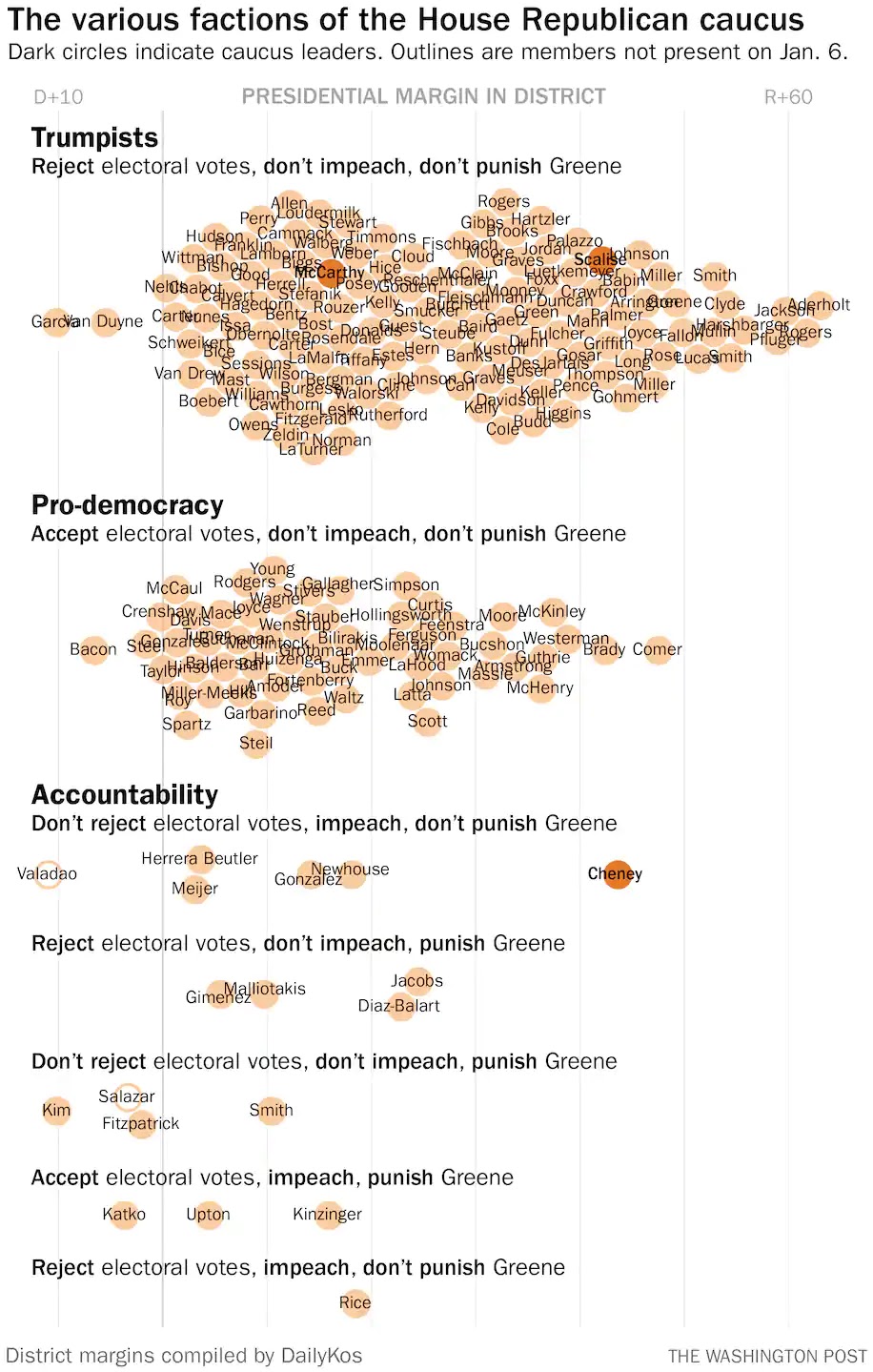
USA Style and MTG


Blog Archive