ABOUT THIS BLOG

I shall post videos, graphs, news stories, and other material there. We shall use some of this material in class, and you may review the rest at your convenience. You will all receive invitations to post to the blog. (Please let me know if you do not get such an invitation.) I encourage you to use the blog in these ways:
To post questions or comments about the readings before we discuss them in class;
To follow up on class discussions with additional comments or questions.
To post relevant news items or videos.

There are only two major limitations: no coarse language, and no derogatory comments about people at the Claremont Colleges.


Search This Blog

Wednesday, April 17, 2019

Domestic Policy

Distributive Politics

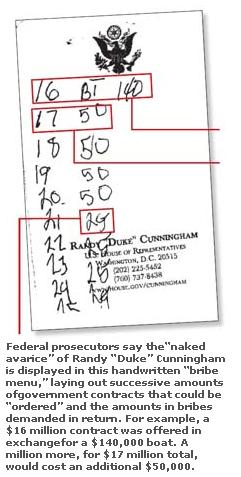
Earmarks and the Cunningham Bribe Menu (Davidson 405-407)


John Hudak at Brookings:
The removal of congressional earmarking does not make earmarking going away. It simply transfers that power and that practice from the legislative branch to the executive branch. Presidents—and their appointees—engage in pork-barrel politicking (earmarking) in the same way Congress does. Reforming the process in Congress by curtailing the practice of earmarking simply shifts that power more explicitly to a president and a cadre of unelected bureaucrats in government. Eliminating earmarking is a serious abdication of power by Congress which empowers a branch of government beyond what the Founders intended.
Regulatory Politics

Regulation and Its Cost (by CMC alum Richard Morrison)

Social Insurance (Theodore Marmor):
Social insurance, like commercial insurance, is about protection against financial risk. It is “insurance” in the sense that people contribute to a fund to protect themselves against unpredictable financial risks. These include outliving one’s savings in old age, the early death of a breadwinner, the onset of a disability that makes work difficult if not impossible, the high costs of acute illness, involuntary unemployment, and work-related injury. Yet unlike with commercial insurance, contributions are not prices in a market and thus do not depend on the contributor’s risk profile (unless commercial regulations say otherwise, in essence creating “social” insurance through the backdoor). Instead of a contract between an enrollee and an insurer, social insurance is a system of shared protection among the insured, most comparable to mutual insurance in the commercial realm, with contributions made in proportion to one’s market income. In social insurance, the “insurer”—whether a government agency or a corporate body with a joint labor-management board—is the agent of the contributing enrollees. And unlike commercial insurance, the social insurance “contract” mandates participation by law, since otherwise adverse selection would cause its unraveling.
Poverty Rate by Age

................18-64................65+

1959............17.0.............35.2
1969............08.7.............25.3
1979............10.9.............15.2
1989............10.2.............11.4
1999............10.1.............09.7
2009............12.9.............08.9
2017............11.2.............09.2

Credit Social Security for the decline in elder poverty

See how different the figures would be:
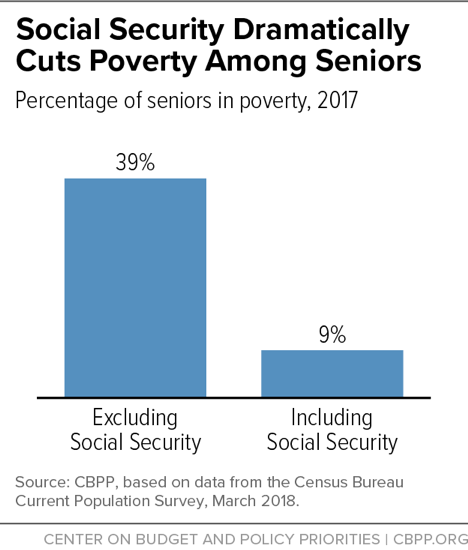
Social Security Dramatically Cuts Poverty Among Seniors


Image result for cost access quality health care


REVISITING A TOPIC FROM MARCH 6:


Policy Windows and  The Issue-Attention Cycle
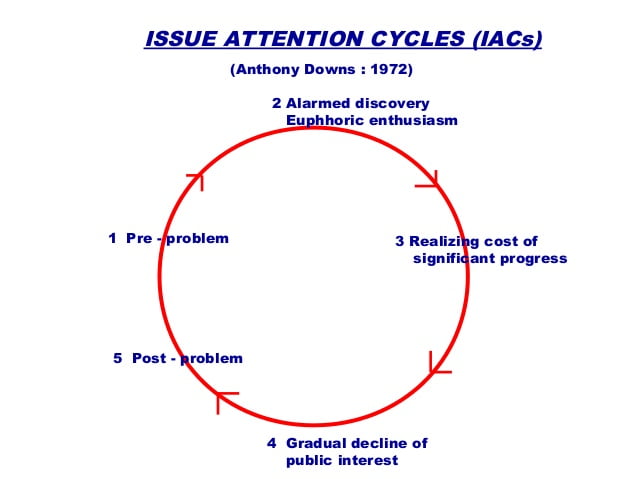
Image result for issue-attention cycle

Monday, April 15, 2019

Pitzer alums and Congress!


Kara Eastman PZ '92, who was a social worker before entering the 2018 midterm race, is running for Congress again in 2020, presumably against incumbent Republican Rep. Don Bacon. In 2018, Eastman who ran on a platform that featured medicare-for-all was just two percentage points away from defeating Bacon in a Nebraska congressional district that voted for Trump.

Rep. Debbie Mucarsel-Powell (D-Fla.) PZ '93, CGU '96, also ran and won a very close race against incumbent Republican Carlos Curbelo.

Here is an article with more information about 7C alums who ran in the 2018 Congressional midterms.

Alum Runs for Congress

Andrea Drusch at McClatchy:
Democrat Candace Valenzuela, a 34-year-old Carrollton-Farmers Branch school board member, is launching a campaign Monday against Texas GOP Rep. Kenny Marchant, one of the party’s top targets in 2020.
She will face an uphill battle for her party’s nomination in Texas’ 24th district, where several high-profile Democrats are eyeing the race. The suburban north Texas seat has long been a conservative stronghold, but the region’s rapidly changing demographics have recently made it more competitive.
Valenzuela, whose mother is Mexican-American and father is African-American, hopes to capitalize on that in her bid against Marchant, a seven-term congressman who narrowly beat a poorly funded opponent in 2018.
...
Valenzuela brings a unique background to the campaign. She grew up in El Paso, where she was homeless at age three.

After her mother left the military, the family lost their home and bounced between staying with grandparents, a Mormon family that took them in and a homeless shelter. Valenzuela recalls sleeping in a bed made out of a kiddy pool outside of a convenience store for several days while they had no place to stay.
“Growing up I dealt with homelessness, with food insecurity, with trouble paying for bills,” said Valenzuela. She credited public school education, food stamps and housing assistance for helping her achieve a full-ride scholarship to Claremont McKenna College in California.
“I’m running for Congress because the opportunities there were there for me to succeed don’t seem like they’re there any more, or they’re under threat,” she added.
Operatives at the Democrats’ House campaign arm and EMILY’s List, a group that backs women who support abortion rights, say they’re still talking to a number of other more well-known candidates who are also considering the race.
The general election race would not be quixotic: Marchant won by just three points in 2018. 

Saturday, April 13, 2019

Power of the Purse


Constitutional Provisions

All Bills for raising Revenue shall originate in the House of Representatives; but the Senate may propose or concur with amendments as on other Bills.”
— U.S. Constitution, Article I, section 7, clause 1

To raise and support Armies, but no Appropriation of Money to that Use shall be for a longer Term than two Years;
-- U.S. Constitution, Article I, section 8, clause 12

“No Money shall be drawn from the Treasury, but in Consequence of Appropriations made by Law; and a regular Statement and Account of the Receipts and Expenditures of all public Money shall be published from time to time.”
— U.S. Constitution, Article I, section 9, clause 7

What follows would baffle a Martian.

Part 1: Authorization

Part 2: Appropriation
Part 3:  "The Budget Process" and key documents:


Part 4:  Mandatory and Discretionary Spending

Part 5:  Revenue Bills and RECONCILIATION (Straus ch. 5)

Part 6:  What happens if the US government defaults on the federal debt?


Revenues -- Where the money comes from:


The tax system is more progressive than most people realize (esp. slide 17):  

Tax expenditures

Outlays -- Where the money goes:


Budget tables:  function, subfunction, agency

No, we cannot balance the budget by catching Social Security fraud: only 13 people aged 112 or older are getting checks.

Deficit


Wednesday, April 10, 2019

Courts and Oversight


Z


Merrick Garland and "the Biden Rule" (Thurber 182)

Gorsuch and the nuclear option (Davidson 368-369)

Blue Slips and Senatorial Courtesy (Davidson, 369)

Suing the president... a Stag (Liz Wydra `98) explains it all:


Problems with oversight:

Capacity
Staffs.......1995.......2015

CRS.........746..........609
GAO.....4,572.......2,989
CBO.........214.........235

Hearings in the Contemporary Congress (Colbert at about 5:00).    See Thurber 135.


Hearing Prep


Mnuchin v. Waters, yesterday:


Graham and Barr, this morning:


How the Ways and Means Committee is asking for Trump's tax returns:

26 USC 6103
Upon written request from the chairman of the Committee on Ways and Means of the House of Representatives, the chairman of the Committee on Finance of the Senate, or the chairman of the Joint Committee on Taxation, the Secretary shall furnish such committee with any return or return information specified in such request, except that any return or return information which can be associated with, or otherwise identify, directly or indirectly, a particular taxpayer shall be furnished to such committee only when sitting in closed executive session unless such taxpayer otherwise consents in writing to such disclosure.
Subpoenas and Contempt of Congress

Monday, April 8, 2019

Congress and Courts


Ecclesiastes 1:9 New International Version (NIV)
What has been will be again,
what has been done will be done again;
there is nothing new under the sun.
The Ultimate Simulation:  The Stanford Prison Experiment


What happens when the court declares a law unconstitutional?

Statutory interpretation (Davidson 355-357): special ed cases


Checks on the Judiciary


  • Court-stipping (Davidson, 358-59) and Patchak v. Zinke

  • Impeachment:  most impeachment trials have involved judges

  • Court organization and administration

  • Constitutional amendments

  • Advice and Consent


    Compare Kavanaugh and Thomas:

    Thursday, April 4, 2019

    Simulation: Tonight and After

    Good work!  Tonight's floor session starts promptly at 6:30 PM in RN15.   Please arrange to finish no later than 9 PM.

    For Monday, please read Davidson, ch. 12.

    Peer evaluation: On Monday, April 8 (the Monday after simulation) please bring in a short memo in which you identify three or four Gov 101 participants who did a particularly good job. Give a couple of sentences to each person you name, explaining why she or he stood out. Give special attention to those who did their work behind the scenes. Please take some care with these memos. In addition to using them for evaluating the assignment, I save them so that I may quote them in future letters of recommendation. Peer evaluations are anonymous: please bring in hardcopy and do not put your own name on the sheet.

    Writeup: In analyzing your role in the simulation, please cover these points:
    • How well did your positions and goals match those of your real-life counterpart?
    • What methods did you use? In the circumstance that you dealt with, would your counterpart have done the same?
    • What obstacles did you face?
    • What did you achieve?
    • How did the simulation both resemble and differ from the real world?
    • Overall, what did you learn?
    You may include relevant supporting materials, such as: memoranda, bill drafts, or strategy notes. (Better yet, just refer to material that is already online, and provide the URLs.) Please be selective here: do not include everything, just the key items.
    • Essays should be double-spaced, and between 5 and 6 pages long. I will not read past the 6th page. (Supporting materials do not count against the page limit.) 
    • Submit the writeups as Word documents, not pdfs.
    • Cite outside sources with Turabian endnotes.
    • Watch your spelling, grammar, diction, and punctuation. Errors will count against you.
    • Return essays to the class Sakai dropbox by 11:59 PM, Friday April 19. Your grade for the simulation will drop one gradepoint for one day's lateness, a full grade after that.

    Blog Archive