ABOUT THIS BLOG

I shall post videos, graphs, news stories, and other material there. We shall use some of this material in class, and you may review the rest at your convenience. You will all receive invitations to post to the blog. (Please let me know if you do not get such an invitation.) I encourage you to use the blog in these ways:
To post questions or comments about the readings before we discuss them in class;
To follow up on class discussions with additional comments or questions.
To post relevant news items or videos.

There are only two major limitations: no coarse language, and no derogatory comments about people at the Claremont Colleges.


Search This Blog

Wednesday, February 16, 2011

Elections, Concluded

A difference between House and Senate races:

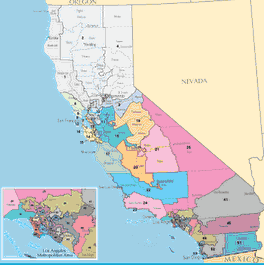
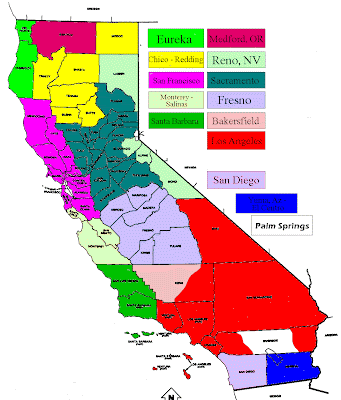
A Designated Market Area (DMA) is a media market, a group of counties that account for the major viewing audience for television stations located in a metropolitan area.

States usually encompass one or more DMAs, though there are anomalies (VT, DE, NJ). House districts, however, do not coincide with DMAs. See, for instance, California's DMAs (left) v. US House districts (right)


Marco Rubio hits some key themes:


Compare Florida Senator and Governor exit polls.


In Kentucky, the big issue was Aqua Buddha:


The repsonse:

Understanding the Budget with Pennies

Tuesday, February 15, 2011

Second Essay Assignment

Choose one of the following:

1. See President Obama’s proposed list of terminations, reductions and savings at http://www.whitehouse.gov/sites/default/files/omb/budget/fy2012/assets/trs.pdf. Pick one. Lay out a strategy for winning approval. In your paper, take account of who supports and opposes the item in question. Also consider the makeup of both chambers and their relevant committees.

2. Predict what the 112th Congress will do about one of these issues:

  • Afghanistan
  • Net neutrality
  • Immigration
  • Housing finance

You may also write on an issue of your own choosing. In your answer, take account of what Congress did on the issue in the past on how the current partisan makeup of the House and Senate will shape the course of legislation. Also consider the president’s position and the possibility of cross-party coalitions.

3. Pick a measure from 2010 (other than the health bill). Explain what happened to it. You may choose your own or take one from this list:

  • HR 5175 – Campaign finance disclosure
  • HR 4173 – Financial regulatory overhaul
  • HR 5281 – Immigration policy
  • HR 4853 – Tax rates
  • HR 2701 – Intelligence authorization
  • HR 3534 – Consolidated Land, Energy, and Aquatic Resources Act

Instead of giving a mere chronology, tell why the measure moved or stalled. What happened to previous versions? Which groups or blocs backed and fought it? Which strategies and tactics did its friends and foes use? Even if it failed or stalled, did it prompt the passage of a similar measure in a different form? Look at parliamentary strategies, major amendments, and roll calls. Get background from a source such as Congressional Quarterly Weekly Report, where you may find the partisan breakdown of roll-call votes. (Use the hardcopy or the online version at http://library.cqpress.com). Other possible sources include:

Again, you should explain the outcome, not just describe the process.

  • Essays should be typed, stapled, double-spaced, and no more than three pages long. I will not read past the third page.
  • Put your name on a cover sheet. Do not identify yourself on the text pages.
  • Cite your sources. You may use either endnotes or parenthetical references to a bibliography. In either case, put your documentation in a standard format (e.g., Turabian or Chicago Manual of Style).
  • Watch your spelling, grammar, diction, and punctuation. Errors will count against you.
  • Return essays by the start of class, March 2. Papers will drop a gradepoint for one day’s lateness, a letter grade after that.
Monday, February 14, 2011

A Politico article defending defense spending gives we Senators on the Armed Forces Committee something to think about regarding the budget as we haggle over fewer funds to bring home to our state military bases.
"In advance of the budget’s release,Defense Secretary Robert Gates announced significant cuts to Pentagon programs, totaling $78 billion over five years."
.
The authors link reduced defense spending with loss of prestige and power abroad. They also suggest a double standard for budget cuts under the Obama administration:
"It is worth asking whether other federal agencies or domestic entitlement programs have been forced to reduce their budgets to the same extent that the Pentagon has over the past two years. The reality is that domestic discretionary spending has ballooned during the Obama administration."

Elections and 2010: Continued


Saturday, February 12, 2011

The Re-rEVOLoution?

At the Conservative Political Action Conference (CPAC), Texas Rep. Ron Paul won the straw poll for presidential candidates by a more-than-slim margin. Our very own visitor, former Massachusetts Gov. Mitt Romney, was the runner-up in the vote.

All that being said, the author noted:

"Fifty-six percent of those surveyed said they were generally satisfied with the field of potential candidates and 43 percent said they wished the GOP had a better field of potential candidates."


And now, the moment you've been waiting for... The list of winners:
Texas Rep. Ron Paul: 30 percent
Former Massachusetts Gov. Mitt Romney: 23 percent
Former New Mexico Gov. Gary Johnson: 6 percent
New Jersey Gov. Chris Christie: 6 percent
Former House Speaker Newt Gingrich: 5 percent
Former Minnesota Gov. Tim Pawlenty: 4 percent
Minnesota Rep. Michele Bachmann: 4 percent
Indiana Gov. Mitch Daniels: 4 percent
Former Alaska Gov. Sarah Palin: 3 percent
Former talk show host Herman Cain: 2 percent
Former Arkansas Gov. Mike Huckabee: 2 percent
Former Pennsylvania Sen. Rick Santorum: 2 percent
South Dakota Sen. John Thune: 2 percent
U.S. Ambassador to China Jon Huntsman: 1 percent
Mississippi Gov. Haley Barbour: 1 percent
Others: 5 percent
Undecided: 1 percent

Read the full story at
http://politicalticker.blogs.cnn.com/2011/02/12/rep-ron-paul-wins-cpac-straw-poll/

Thursday, February 10, 2011

Lisa Murkowski: Free Bird in the Senate?

A Politico article published today features Sen. Lisa Murkowski (R-AK), who was recently re-elected in a historic write-in effort after losing the primary. I wrote my paper about that election, but didn't have much space to talk about its consequences for Senatorial politics. The consequences, however, are significant:

Murkowski is "liberated in a lot of ways," said Norm Ornstein of the American Enterprise Institute. "She didn't have to kowtow to her party. She is caucusing with Republicans but she doesn't owe anything to the leadership."

At a closed-door session in September, Senate Republicans rejected a bid by DeMint to strip Murkowski of her leadership role on the energy panel after she’d decided to run as a write-in candidate. "I think McConnell and a couple of others made sure they didn’t do that because they all of a sudden realized that if she won that would really be a problem for them," Ornstein said.

"I do not expect her to be a regular thorn in the side of her own party's leaders," he said. "But she's going to pick her spots."

In the past, those spots have been issues like DADT repeal and the Matthew Sheppard hate crimes legislation -- moments when she broke from her party to vote with Democrats. In the future, these spots might include energy issues, especially those particularly important to Alaska. It is possible that Murkowski will buck the party line more often this term since she owes her election to a broader coalition of Alaskans, including liberal Democrats. On the other hand, she can't afford to completely lose the conservative vote in a Red state like Alaska. So Murkowski has to walk a fine line: voting with the party on some issues, and choosing -- wisely -- when to disobey. Whatever she does, it will be interesting and important to watch.


Blog Archive