ABOUT THIS BLOG

I shall post videos, graphs, news stories, and other material there. We shall use some of this material in class, and you may review the rest at your convenience. You will all receive invitations to post to the blog. (Please let me know if you do not get such an invitation.) I encourage you to use the blog in these ways:
To post questions or comments about the readings before we discuss them in class;
To follow up on class discussions with additional comments or questions.
To post relevant news items or videos.

There are only two major limitations: no coarse language, and no derogatory comments about people at the Claremont Colleges.


Search This Blog

Wednesday, March 11, 2026

Congress and POTUS II

End class early: Pallavi Raju (Kaine) will be here.

Broader discussion of Congress and presidential power. The NYT article.

Power to Persuade


1. Republicans who lost primaries after opposing Trump U.S. House
MemberStateYearReason / Context
Liz CheneyWyoming2022Lost GOP primary after voting to impeach Trump and serving as vice-chair of the Jan. 6 committee.
Jaime Herrera BeutlerWashington2022Voted to impeach Trump; eliminated in the 2022 “jungle” primary amid pro-Trump challenges.
Tom RiceSouth Carolina2022Voted to impeach Trump; defeated by Trump-backed challenger Russell Fry.
Peter MeijerMichigan2022Voted to impeach Trump; defeated in GOP primary by Trump-backed John Gibbs.
Mark SanfordSouth Carolina2018Prominent Trump critic; lost primary to Trump-endorsed challenger Katie Arrington.
Bob GoodVirginia2024Initially backed Ron DeSantis instead of Trump in the presidential primary and lost to Trump-endorsed challenger John McGuire. 

2. Republicans who retired rather than run again amid conflict with Trump

U.S. House

MemberStateYearNotes
Adam KinzingerIllinois2022One of two Republicans on the Jan. 6 committee; chose not to seek reelection.
Anthony GonzalezOhio2022Voted to impeach Trump; announced retirement citing political toxicity and threats.
Fred UptonMichigan2022Impeachment vote; retired after intense pro-Trump backlash.
John KatkoNew York2022Impeachment vote; retired amid expected Trump-aligned primary challenge.
Paul RyanWisconsin2018As Speaker, clashed with Trump on several issues and chose to retire rather than seek reelection.

U.S. Senate

MemberStateYearNotes
Jeff FlakeArizona2018Frequent Trump critic; announced retirement saying the party was abandoning conservative principles.
Bob CorkerTennessee2018Openly clashed with Trump and retired rather than run again.
Ben SasseNebraska2022Long-time Trump critic; left the Senate to become president of the University of Florida.
Thom TillisNorth Carolina2026Announced retirement after conflict with Trump and backlash from MAGA activists. 


So we're going over Labor Day 1990 to look at the buildup in Bahrain, Kuwait, and Saudi Arabia. There are two planes, one Senate, one House. I'm on the House plane obviously because I'm the House Deputy. But we have this mixture of young and older Members.

Newt was on the plane but Bob Michel, Rostenkowski, [William] Broomfield, Dante Fascell, I think Dingell was on the plane. The delegation was headed by Gephardt, who at the time was majority leader. It's a 15-hour flight. We're going to stop in the Azores but we have dinner served on the plane and all the younger guys separate, go off, read books, go to bed. The older guys set up a card table at the front of the plane, proceed to play cards and drink all night long. I'm hanging out there, just listening to these guys.

So the conversation is banter and this and that and then, "What are we going to do about this, we probably need a resolution. Foley and Gephardt already signaled that they're going to be against it." These guys just, as they did on so many issues, started talking back and forth about what they would do. When it came time for the vote we worked with Fascell, we worked with Rostenkowski, got a lot of these older guys to pass the resolution. It is a little-recognized fact that for the Second Gulf War resolution we got a lot more Democratic votes than we did the first one, despite having that big coalition. But that for me was almost the breaking point. It became increasingly rare to see that kind of cooperation across the aisle.


AP report on Iran polls: "About half of registered voters — 53% — oppose U.S. military action against Iran, according to a new Quinnipiac Poll conducted over the weekend. Only 4 in 10 support it, and about 1 in 10 are uncertain. A new Ipsos poll also found more disapprove than approve of the strikes."


War Power and Iran


A moment when the Shadow Congress came out of the shadows and decided on war.


Sunday, March 8, 2026

Congress and POTUS

 Simulation details.  Will adjourn early for informal caucusing.  Jenna Milbrodt (Risch) will be here to advise.  Pallavi Raju (Kaine) will be here on Wed.  Harrison Steck is willing to play Trump.

Reserved Kravis 161 for committee meetings during simulation.

For Wednesday, let's have a broader discussion of Congress and presidential power.  Read this NYT article, bring questions and comments.

Acronym time!

The Struggle Over Presidential Authority: Article I and Article II

Vetoes.  
1— Strongly Support Passage
2— Support Passage
3— Do not Object to Passage
4— No Position on Passage
5— Oppose
6— Strongly Oppose
7— Secretary’s Veto Threat (single and multiple agency)
8— Senior Advisor’s Veto Threat
9— Presidential Veto Threat (285-286) and other warnings.
Newt Gingrich, Lessons Learned the Hard Way (1998):
We had not only failed to take into account the ability of the Senate to delay us and obstruct us, but we had much too cavalierly underrated the power of the President, even a President who had lost his legislative majority and was in a certain amount of trouble for other reasons. I am speaking of the power of the veto. Even if you pass something through both the House and the Senate, there is that presidential pen. How could we have forgotten that? For me especially it was inexcusable, because when I was Republican whip during the Bush Administration one of my duties had been precisely to help sustain presidential vetoes.
Item Veto (287): Supreme Court struck it down in Clinton v. City of New York.

Guess who was primarily responsible..

Signing statements (291)
Courts can also undo actions.  The case of DAPA -- US v. Texas


Power to Persuade


Tuesday, March 3, 2026

Deals and the Shadow Congress

Adjourn at 10:35 for preliminary meetings.  Harrison Steck-- Shaheen from 2025 -- will be present to provide guidance and answer questions.  From my presidency course, recruit a president and cabinet members.

For your write-ups, explain how what you learn this week could guide your activity in the simulation.

Questions on the assignment?

For Monday, read Davidson, ch. 10.

Expertise and acceptable sources of information.

  • "Everyone is entitled to his own opinion, but not to his own facts"
  • Stipulated knowledge and CBO.
  • Knowledge levels of members.    
Repeated interactions
The Secret or Shadow Congress


The final two-plus years of the Trump administration, for example, began with a government shutdown and featured two presidential impeachments. But they also saw the passage of a major conservation bill, a new trade agreement, significant criminal-justice reform, and several pandemic-relief packages.


In 2022: The House overwhelmingly passed legislation to reform the beleaguered U.S. Postal Service. Days later the Senate approved, without a single vote in opposition, a bill proposed in response to the #MeToo movement that bans the use of forced arbitration in workplace sexual-harassment and assault cases. A bipartisan group of senators also announced an agreement on a long-stalled reauthorization of the Violence Against Women Act, likely clearing the way for its passage.


Update 

One key is the presence of institutionalists (Cole and DeLauro -- and Thune!)

Another key is privacy

 Think about the downsides of public meetings

  • Who actually attends (or watches) and takes notes?
  • How do members behave?  What kindsof questions do they ask?

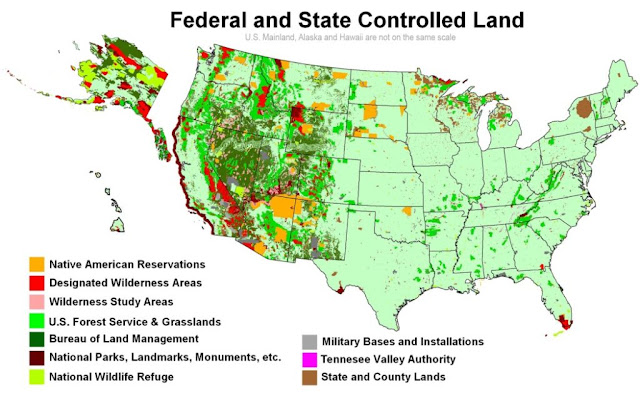
A third key is the range of potential beneficiaries:


 Image result for public lands forests map


The vehicle


Suspension of the rules gets around germaneness issues.

More recent examples:

Monday, March 2, 2026

Making Deals

Adjourn at 10:35 for preliminary meetings.  From my presidency course, recruit a president and cabinet members.

Iran attack, politics, and war powers

Questions on the assignment?

For Wednesday, read

Types of deals
Other conditions of negotiation

Parties
  • Calculation for majority:  which minority votes do you seek first?
  • Calculation for minority:  deal or fight? Internal political pressure: bombthrowers v. responsible partners.
  • Messaging:  selling the agreement to the relucant.  Again, LBJ and the 1957 Civil Rights Act.

What are the costs and benefits of transparency?


Expertise and acceptable sources of information.
  • "Everyone is entitled to his own opinion, but not to his own facts"
  • Stipulated knowledge and CBO.
  • Knowledge levels of members
    
Repeated interactions
  • Short-term:  confidence building
  • Longer term: reputations, grudges, and the Favor Bank
  • How does partisanship hinder interaction?  Workaround: "gangs."

Penalty defaults

Policy Windows
When you win big you can have anything you want for a time. You come home with that big landslide and there isn’t a one of them [in Congress] who’ll stand in your way. No, they’ll be glad to be aboard and to have their photograph taken with you and be part of all that victory. They’ll come along and they’ll give you almost everything you want for a while and then they’ll turn on you. They always do. They’ll lay in waiting, waiting for you to make a slip and you will. They’ll give you almost everything and then they’ll make you pay for it. They’ll get tired of all those columnists writing how smart you are and how weak they are and then the pendulum will swing back.


Wednesday, February 25, 2026

Sim 2026: Who Is Playing Whom?

 Health, Education, Labor, and Pensions

Democrats

  • Bernie Sanders VT (chair) Bernie Santos
  • Patty Murray WA Camden Fujimoto
  • Tammy Baldwin WI  Bea Dramm
  • Maggie Hassan NH Greta Long
  • Tim Kaine VA Nikhil Chand
  • Chuck Schumer NY  Rohit Iyer

Republicans

  • Bill Cassidy LA (ranking) Scott Sloop
  • Rand Paul KY Sophie Prosper
  • Markwayne Mullin OK Zoe Mui
  • Tim Scott SC Josephine Jett
  • John Thune SD David Yusten

Judiciary

Democrats

  • Dick Durbin IL (chair) Ridhi Patel
  • Sheldon Whitehouse RI Juan Pozo
  • Amy Klobuchar MN Logan Fang
  • Cory Booker NJ Mia Balonick
  • Adam Schiff CA Anjali Nuggehalli

Republicans

  • Chuck Grassley IA (ranking) Solvej Eversoll
  • Lindsey Graham SC Soumya Rman
  • Ted Cruz TX Catalina de la Peña
  • Josh Hawley MO Shannon Bennitt
  • John N. Kennedy LA Daniel Bazmi

Congress and Interest Groups

For next time: "Making Deals in Congress" (Canvas)

Questions on the assignment?

Role selection

And for the weekly write-up, draw on Davidson to describe your simulation senator's approach to legislating.  What kinds of bills are your going to support or oppose?

---------------

What is lobbying?

Interest group ratings (375-76)

WHY WAS THE NRA POWERFUL? IT IS NOT THE PAC CONTRIBUTION (Note that NRA has gotten weaker)
How many Americans are economically dependent on fossil fuels? The industry itself and industries that depend on fossil fuels


Think tanks and Consultants

Philanthropy

Sunday, February 22, 2026

Congressional Decisions

For Wednesday:   
About the sim:

Vote-a-Rama (amendments mostly symbolic and nonbinding)


Rule XIV of the Senate:
The Senate’s standing committees play an essential part in the legislative process, as they select the small percentage of the bills introduced each Congress that, in their judgment, deserve the attention of the Senate as a whole, and as they recommend amendments to these bills based on their expert knowledge and experience. Most bills are routinely referred to the committee with appropriate jurisdiction as soon as they are introduced. However, paragraph 4 of Rule XIV permits a Senator to bypass a committee referral and have the bill placed directly on the Calendar of Business, with exactly the same formal status the bill would have if it had been considered and reported by a Senate committee.

Mr. MCCONNELL. Mr. President, I understand that there is a bill at the desk, and I ask for its first reading.

The PRESIDING OFFICER. The clerk will read the bill by title for the first time.

The senior assistant legislative clerk read as follows:

A bill (S. 1035) to extend authority relating to roving surveillance, access to business records, and individual terrorists as agents of foreign powers under the Foreign Intelligence Surveillance Act of 1978 and for other purposes.

Mr. MCCONNELL. I now ask for a second reading and, in order to place the bill on the calendar under the provisions of rule XIV, I object to my own request.

The PRESIDING OFFICER. Objection having been heard, the bill will be read for the second time on the next legislative day.2

Hotlining -- a 2019 example -- a short video
Earmarking and Phonemarking
BTU'd
Alternative to conference: "message between houses" or Ping-ponging

Individual Decisions

Specialization and the importance of biography (Davidson, p. 251)

Timing

Party Unity (Davidson p. 260). TO ANALYZE A ROLL-CALL VOTE, LOOK AT THE EXCEPTIONS: THE MEMBERS WHO BROKE PARTY RANKS.  Marshall Bessey thesis on the impeachment Republicans 

From Roll Call:


DO NOT TRY TO REDUCE ROLL CALL VOTES TO CAMPAIGN CONTRIBUTIONS. Consider primary and general election constituencies.


History and DW-Nominate (Davidson 267)


This measurement is extremely influential in political science. It is also extremely flawed.

Bargaining and cues
  • Logrolling
  • Implicit v. Explicit Bargaining
  • Cosponsorship (could be part of your paper) and Dear Colleague

Imp

Simulation Roles

In our simulation metaverse, Trump is still president but Democrats are in the majority.  If class enrollment remains steady, we will have a 5-5 ratio on Judiciary, but with the chair having two votes.

HELP and Judiciary got the most support, and several of you wisely mentioned the cast of characters as a reason for picking them.  The class is not large enough to include every IRL member, but the roster below seems representative.  You can see the real rosters here:

https://www.help.senate.gov/about/members

https://www.judiciary.senate.gov/about/members

If you have suggestions for any names below that we could swap out for an actual member, let me know.

Note that Thune and Schumer are not actually on HELP, but we need the party leaders in the simulation.  And both have taken many issue positions on the topics that HELP covers.


Health, Education, Labor, and Pensions

Democrats

  • Bernie Sanders VT (chair)
  • Patty Murray WA
  • Tammy Baldwin WI
  • Maggie Hassan NH
  • Tim Kaine VA
  • Chuck Schumer NY (added for sim purposes)

Republicans

  • Bill Cassidy LA (ranking)
  • Rand Paul KY
  • Markwayne Mullin OK
  • Tim Scott SC
  • John Thune SD (added for sim purposes)

Judiciary

Democrats

  • Dick Durbin IL (chair)
  • Sheldon Whitehouse RI
  • Amy Klobuchar MN
  • Cory Booker NJ
  • Adam Schiff CA

Republicans

  • Chuck Grassley IA (ranking)
  • Lindsey Graham SC
  • Ted Cruz TX
  • Josh Hawley MO
  • John N. Kennedy LA

Tuesday, February 17, 2026

Process


For Monday, Davidson, ch. 9.

Colbert, Talarico and the FCC

Keep an eye on the Iran situation.  We will later discuss war powers.

Questions on the assignment?

Further thoughts on simulation committees?  For your writeup, everybody pick two and tell why they would be good for our purposes.  On Monday, I will announce the committees and roles.  On Wednesday, you will choose the roles.

Most bills die. Go to Vital Statistics on Congress  and look at chapter 6.  In the 118th Congress:

House -- Ratio of passed/introduced = 995 /12,547 ≈ 0.079 or 7.9%
Senate --  Ratio of passed/introduced = 1,029/6,759 ≈ 0.152 or 15.2%

Why do so many members introduce so many doomed bills?

Committee chairs

                                House                                    Senate
                                                                                                  
Main FactorParty steering committee choiceSeniority on the committee
Republican Term Limits6 years (3 terms)6 years (3 terms)
Democratic Term LimitsNoneNone
Final ApprovalVoted by party caucus/conferenceVoted by party conference


Committee basics
Hearings
Markup

  • Unanimous consent agreements (Davidson 236-238)
  • Filibuster
  • Cloture


Sunday, February 15, 2026

Committees and Bills

The assignment.

For next time, ch. 8

The most reassuring video I will show you all semester:

Simulation committees?

Think about where you come from.  If you were a House member from that district, what committees would you want?

  • How members end up on committees
    • "Steering committees" in House & Senate (Davidson pp. 190-195 of print ed)
    • Speaker-appointed House committees: Rules, House Administration, Intelligence
    • Seniority and other criteria
  • Removals:  The case of Ilhan Omar
  • House and Senate jurisdictions are not quite the same.


LEGISLATION REALLY CAN PASS (more later)


USA PATRIOT Act:  “Uniting and Strengthening America by Providing Appropriate Tools Required to Intercept and Obstruct Terrorism


Research Assignment

Pick one current (119th Congress) bill that a House member or senator has introduced since October 1 and has not yet passed either chamber. (See a sample list at the end of this assignment.) You are a legislative assistant in the prime sponsor’s office. Your boss (House member or senator) has one clear instruction: “I don’t need a think piece. I need a plan that can actually move this bill through my chamber this year.” Your job is to produce a 5-page memo that lays out a plausible path from introduction to passage in your boss's chamber, given partisan margins and the realities of committees, procedure, leadership, interest groups, and the administration. Also consider your boss's party affiliation, committee assignments, seniority, and reputation within the chamber.

Additional specs:
  • The memo must read as if it were actual staff work. (A good product would make a nice writing sample when you apply for internships and jobs.) Every memo starts with a standard block of information, typically following an email-like format: 
  • TO: Senator Gus Fring
  • FROM: Walter White
  • DATE: March 6, 2026
  • SUBJECT (or RE): Passing legislation to legalize blue sky meth
  • Identify possible sources of support and opposition (e.g., interest groups, constituencies, administration officials).  
  • Lay out a step-by-step process to gain support and get the measure to a successful floor vote.
  • Include an appendix (which does not count toward the page limit) with a screenshot of the official bill status page (with date visible).

Get background from a source such as CQ Magazine.  Other possible sources include:

For further tips on legislative research, see videos on 
--------------------------------------------------------------------------
  • Essays should be typed, double-spaced, and no more than five pages long. I will not read past the fifth page.
  • Submit papers as Word documents, not PDFs or Google docs.
  • Cite your sources with endnotes in standard Turabian format. Endnote pages do not count against the page limit.
  • Misrepresenting AI-generated content as your own work is plagiarism and will result in severe consequences.
  • Watch your spelling, grammar, diction, and punctuation. Errors will count against you -- especially those I have noted on previous papers. Return essays (again, as Word documents, not PDFs) to Canvas by 11:59 PM, Friday, March 6. I reserve the right to dock papers one grade point for one day’s lateness, a full letter grade after that.

========
Here is a sample list.  You may choose others since October 1, 2025.

House bills

H.R. 5755 — No Budget, No Pay Act (Rep. Scott Peters)
Withholds Members’ pay after Oct. 1 in any fiscal year unless Congress adopts a budget resolution and enacts the regular appropriations bills.

H.R. 5826 — IDEA Act of 2025 (Rep. Haley Stevens)
Establishes a grant program to expand entrepreneurship opportunities for minority business enterprises.

H.R. 6157 — FORCE Act of 2025 (Rep. Jimmy Panetta)
Smend title XVIII of the Social Security Act to provide benefits under the Medicare program for first responders at the age of 57.

H.R. 6261 — Fairness for 9/11 Families Act (Rep. Brian Fitzpatrick)
Amends the U.S. Victims of State Sponsored Terrorism Fund payment rules for certain 9/11-related judgment creditors.

H.R. 6686 — No Cost Educational Resources Act of 2025 (Rep. Bill Foster)
Authorizes grants for colleges to offer courses whose required readings use only publicly available digital resources (supporting ‘no-cost’/open educational reading materials).

H.R. 6981 — SHINE Act of 2026 (Rep. Susie Lee)
Directs DOE to develop and support voluntary streamlined local permitting and inspection for qualifying residential distributed energy systems (solar, batteries, EV chargers).

H.R. 7101 (Rep. Adelita Grijalva) -- require that an individual elected to fill a House vacancy in a special election shall have an opportunity to take the oath of office within five legislative days after certification of that elecition.

H.R. 7282 (Rep. Jeff Crank)
Incentivizes states to reconsider adoption of certain energy-efficiency housing codes.

H.R. 7308 — CALM Modernization Act (Rep. Stephanie Bice)
Extends CALM Act loudness requirements to video programming delivered via internet protocol (streaming) and related services

H.R. 7312 — (Federal dollars fraud task force bill) (Rep. Young Kim) — Establishes a national task force to investigate/combating fraud involving federal dollars (oversight + intergovernmental coordination).

H.R. 7484 (Rep. Andy Barr)
Amends the Electronic Fund Transfer Act to adjust certain thresholds for inflation.

H.R. 7551 (Rep. Cory Mills)
 To prohibit the head of a Federal agency from entering into an agreement with an entity that discriminates against Federal law enforcement, 

 Senate Bills 

S. 3061 — HUD Transparency Act of 2025 (Sen. John Cornyn)
 Requires expanded public reporting and accountability measures at HUD.

S. 3100 — POST Act of 2025 (Sen. John Curtis)
directs the Director of the Federal Protective Service to establish processes to strengthen oversight, performance, and accountability of contract security personnel engaged in the protection of certain buildings and grounds.

S. 3153 — CLEAR Act of 2025 (Sen. Rick Scott)
Revises national security policy authorities affecting defense operations.

S. 3283 — Exclusive Citizenship Act of 2025 (Sen. Bernie Moreno) -- forbids dual citizenship

S. 3333 — Emergency Savings Enhancement Act of 2025 (Sen. Todd Young)
 Encourages employers to offer short-term emergency savings accounts for workers.

S. 3410 (Sen. Andy Kim)
Creates federal technology and AI talent teams to modernize agency hiring.

S. 3539 (Sen. Adam Schiff)
“Requires DoD to provide Congress (and publicly release) unedited video of specified Sept. 2, 2025 strikes.”

S. 3554 (Sen. John Cornyn)
 Amends the Internal Revenue Code of 1986 to terminate the tax-exempt status of terrorist supporting organizations.

S. 3597 — National Quantum Initiative Reauthorization Act of 2026 (Sen. Todd Young)
Reauthorizes federal research programs promoting quantum computing innovation.

S. 3600 — National Housing Emergency Act of 2026 (Sen. Elissa Slotkin)
Requires the President to declare a national housing emergency and invoke the Defense Production Act to incentivize residential housing production.

S. 3653 — Veterans’ Bill of Rights Act of 2026 (Sen. Marsha Blackburn)
Establishes additional procedural protections for veterans interacting with VA.

S.3853 – Vaccine Liability Shield Amendment Sponsor: Sen. Rand Paul (R-KY) would amend the Public Health Service Act to modify liability protections.

S.3855 – Bilateral Defense Cooperation Enhancement Act
Sponsor: Sen. Ted Budd (R-NC)  would enhance defense cooperation with Israel


S. 3653 — Veterans’ Bill of Rights Act of 2026 (Sen. Marsha Blackburn)
Establishes additional procedural protections for veterans interacting with VA.

S.3853 – Vaccine Liability Shield Amendment Sponsor: Sen. Rand Paul (R-KY) would amend the Public Health Service Act to modify liability protections.

S.3855 – Bilateral Defense Cooperation Enhancement Act
Sponsor: Sen. Ted Budd (R-NC)  would enhance defense cooperation with Israel.


Blog Archive