In other news, although Tik Tok was just officially listed as a dangerous technology in S.2, passed during our simulation, this Tik Tok is oddly related to our last class: https://vm.tiktok.com/vQdUNp/
Thursday, April 30, 2020
Lots of Money is Flowing Into Washington
Just over $900 million has been spent on federal lobbying in the first quarter of 2020. The COVID-19 pandemic has created a lot of uncertainty for firms, and many of them are now lobbying so that both Congress and the executive branch will be friendly to them while sorting out this mess. Unsurprisingly, the health care industry has been leading the way, accounting for 18% of that lobbying. It is estimated that this quarter will be the most money ever spent on lobbying in history, narrowly beating out 2010's first quarter. As this pandemic continues, it will be interesting to see if companies that spent lots of money on lobbying, like Facebook, get preferential treatment from Congress or not.


Proposal for Remote Voting
Senators Rob Portman (R-OH) , Dick Durbin (D-IL) and security expert Jason Matheny at the New York Times:
An essential part of the Senate’s constitutional function, no matter the circumstances, is for senators to cast votes on legislation. We propose allowing remote voting during emergencies on a temporary basis. In times like these, that means updating Senate tradition so senators can follow the guidance of medical experts and adhere to strict social distancing measures. We are at the point where remote voting may be critical for the Senate to be able to govern on behalf of the American people and help lead our country through this crisis.They outline three security principles:
While there are logistical challenges involved, the technology exists for the Senate to adopt a secure remote voting system. Our specific proposal would authorize the Senate’s technology leadership — the Senate sergeant-at-arms — to determine the specifics of a remote voting system.
- Identity authentication before the vote;
- Verification after the vote;
- Encryption.
Wednesday, April 29, 2020
Violent Congress
Ken Burns: "In a country that had for fourscore and five years been celebrating the fact that we had been founded on this unique idea that all men are created equal, there is a disconnect - so that you begin to see that almost everything that came before the Civil War led up to it, and everything since has been, in a way, a consequence of it."
Professor Joanne Freeman (Pomona `84):
The book on violence in the antebellum Congress:
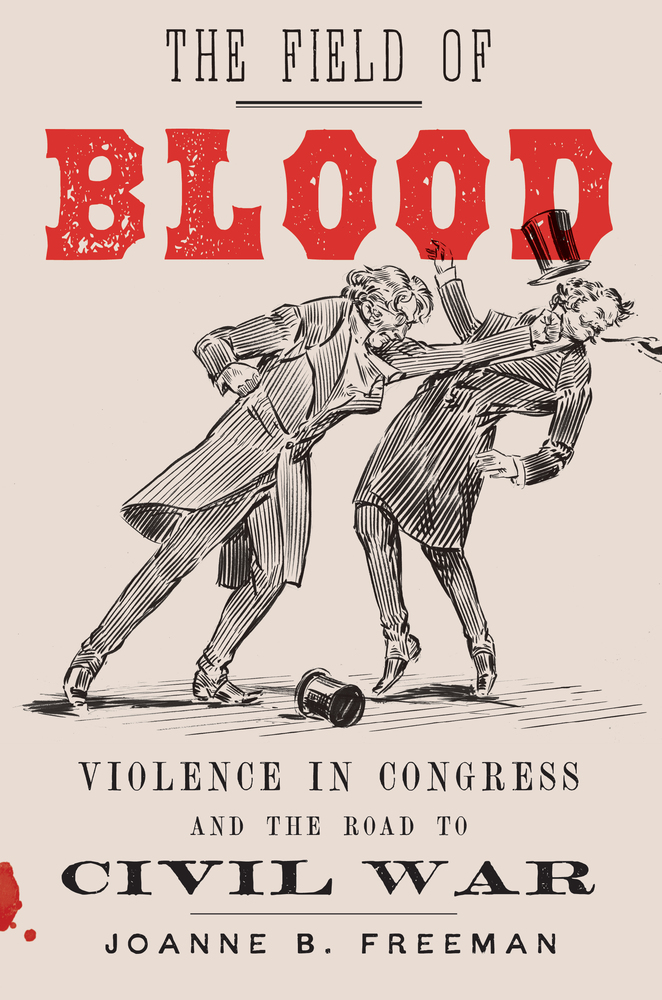
The title comes from this line, which provides the book's epigraph: In a letter to Senator Charles Sumner (MA) Rev. John Turner Sargent wrote that "blood would flow—somebody’s blood, either yours or Wilson’s, or Hale’s, or Giddings’— before the expiration of your present session on that field of blood, the floor of Congress.”
Sargent was alluding to the burial place of Judas: "And the chief priests took the silver pieces, and said, It is not lawful for to put them into the treasury, because it is the price of blood. And they took counsel, and bought with them the potter's field, to bury strangers in. Wherefore that field was called, The field of blood, unto this day" (Matthew 27:6-8 KJV)
It was literally an atmosphere conducive to violence:
Why did JFK focus on a Missouri senator? Perhaps because Missouri was a swing state. In 1960, he would carry it by less than a point, 50.3% to 49.7% for Nixon.
Thomas Hart Benton and pistols in the Senate
"Mr. Foote, who occupies a seat on the outer circle, in front of the Vice President's chair, retreated backwards down the aisle, towards the chair of the Vice President, with a pistol in his hand...
"In a moment almost every Senator was on his feet, and calls to order;" demands for the Sergeant-at-Arms; requests that Senators would take their seats, from the Chair and from Individual Senators were repeatedly made. Mr. Benton was followed and arrested by Mr. Dodge of Wisconsin, and, in the confusion and excitement which prevailed, he was heard to exclaim, from time to time: "I have no pistols!" "Let him fire!" "Stand out of the way!" "I have no pistols" "I disdain to carry arms!" "Stand out of the way, and let the assassin fire!"
"While making these exclamations, Mr. Benton was brought back to his seat; but breaking away from Mr. Dodge, of Wisconsin, who sought forcibly to detain him, advanced again towards Mr. Foote, who stood near the Vice President's chair, on the right-hand side, surrounded by a number of Senators, and others not members of the Senate. Mr. Dickinson took the pistol from the hand of Mr. Foote and locked it up in his desk, and Mr. Foote, on the advice of Mr. Butler, returned to his seat."

In 1856, Senator Sumner delivered his famous "Crime Against Kansas" speech. He attacked the absent Andrew Butler (SC), saying he had " a mistress . . . who, though ugly to others, is always lovely to him; though polluted in the sight of the world, is chaste in his sight—I mean," the harlot, Slavery."
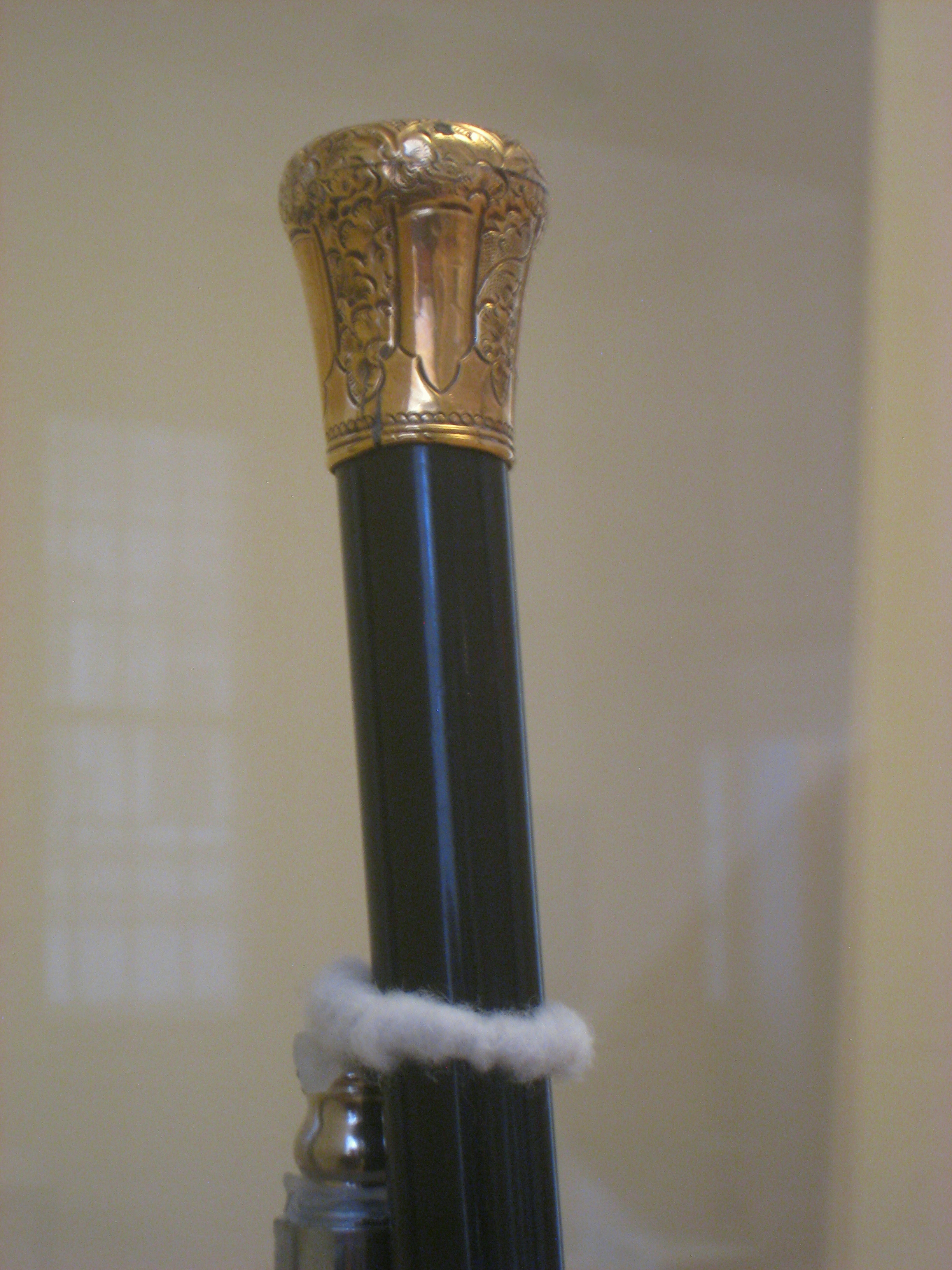
Two days later, Butler's cousin, Representative Preston Brooks of South Carolina, responded:

You can see the cane in a Boston museum:
Lincoln-Douglas debates
Sam Houston:
Congress and the Civil War
The congressional oath of office dates from this era.
Background on the impeachment process.
There is an entire site on the Johnson impeachment.
See the Tenth Article of Impeachment:
Lucius Lamar
Professor Joanne Freeman (Pomona `84):
The book on violence in the antebellum Congress:
The title comes from this line, which provides the book's epigraph: In a letter to Senator Charles Sumner (MA) Rev. John Turner Sargent wrote that "blood would flow—somebody’s blood, either yours or Wilson’s, or Hale’s, or Giddings’— before the expiration of your present session on that field of blood, the floor of Congress.”
Sargent was alluding to the burial place of Judas: "And the chief priests took the silver pieces, and said, It is not lawful for to put them into the treasury, because it is the price of blood. And they took counsel, and bought with them the potter's field, to bury strangers in. Wherefore that field was called, The field of blood, unto this day" (Matthew 27:6-8 KJV)
It was literally an atmosphere conducive to violence:
All this in a room that was hot, stuffy, and smelly. At the end of a typical day, with the galleries full and hours of body heat trapped in the chamber, French thought that reading aloud to members was like reading “with his head stuck into an oven.” When the House moved to larger windowless quarters in 1857, the acoustics improved but the air didn’t. This wasn’t just a matter of cigar smoke, whiskey fumes, and body odor. A series of climate studies revealed the scope of the problem: no air was circulating in the chamber, and the wisp of a draft that rose through the floor grates had to pass through a layer of “lint, dirt, tobacco quids, expectoration, and filth of every sort.” One member claimed that the “confined and poisonous” air had caused “much sickness and even several deaths,” and indeed, a handful of congressmen died during an average session, though not necessarily because of the air. Ongoing whimpering from the floor produced another study, this one demonstrating that it was thirty degrees warmer inside than outside and that the chamber smelled of sewage from the basement. Visiting the new chamber not long after it opened, French wasn’t impressed. The idea of “shutting up a thousand or two people in a kind of cellar, where none of God’s direct light or air can come in to them . . . does not jump with my notions of living,” he groused. Thirty years later, members still declared the House “the worst ventilated building on the continent."
Why did JFK focus on a Missouri senator? Perhaps because Missouri was a swing state. In 1960, he would carry it by less than a point, 50.3% to 49.7% for Nixon.
Thomas Hart Benton and pistols in the Senate
"Mr. Foote, who occupies a seat on the outer circle, in front of the Vice President's chair, retreated backwards down the aisle, towards the chair of the Vice President, with a pistol in his hand...
"In a moment almost every Senator was on his feet, and calls to order;" demands for the Sergeant-at-Arms; requests that Senators would take their seats, from the Chair and from Individual Senators were repeatedly made. Mr. Benton was followed and arrested by Mr. Dodge of Wisconsin, and, in the confusion and excitement which prevailed, he was heard to exclaim, from time to time: "I have no pistols!" "Let him fire!" "Stand out of the way!" "I have no pistols" "I disdain to carry arms!" "Stand out of the way, and let the assassin fire!"
"While making these exclamations, Mr. Benton was brought back to his seat; but breaking away from Mr. Dodge, of Wisconsin, who sought forcibly to detain him, advanced again towards Mr. Foote, who stood near the Vice President's chair, on the right-hand side, surrounded by a number of Senators, and others not members of the Senate. Mr. Dickinson took the pistol from the hand of Mr. Foote and locked it up in his desk, and Mr. Foote, on the advice of Mr. Butler, returned to his seat."

In 1856, Senator Sumner delivered his famous "Crime Against Kansas" speech. He attacked the absent Andrew Butler (SC), saying he had " a mistress . . . who, though ugly to others, is always lovely to him; though polluted in the sight of the world, is chaste in his sight—I mean," the harlot, Slavery."
Two days later, Butler's cousin, Representative Preston Brooks of South Carolina, responded:
You can see the cane in a Boston museum:
Lincoln-Douglas debates
Sam Houston:
- Was once a House member from Tennessee;
- In 1832, caned Rep. William Stanbery of Ohio;
- As a senator from Texas, was the sole Southern Democrat to vote against the Kansas-Nebraska Act.
- On the eve of the Civil War, won the Texas governorship but refused to take an oath to the Confederacy.
Congress and the Civil War
The congressional oath of office dates from this era.
Background on the impeachment process.
There is an entire site on the Johnson impeachment.
See the Tenth Article of Impeachment:
[Johnson did] make and deliver with a loud voice certain intemperate, inflammatory and scandalous harangues, and did therein utter loud threats and bitter menaces as well against Congress as the laws of the United States duly enacted thereby, amid the cries jeers and laughter of the multitudes then assembled and in hearing ... Which said utterances, declarations, threats, and harangues, highly censurable in any, are peculiarly indecent and unbecoming in the Chief Magistrate of the United States, by means whereof said Andrew Johnson has brought to high office of the President of the United States into contempt, ridicule, and disgrace, to the great scandal of all good citizens, whereby said Andrew Johnson, President of the United States, did commit, and was then and there guilty of a high misdemeanor in office.JFK's account:
- Airbrushes Andrew Johnson, who opposed secession but not for reasons of human rights: "Damn the negroes. I am fighting those traitorous aristocrats, their masters."
- Overlooks the possibility of bribery
Lucius Lamar
Canadian Parliament Meeting Virtually
Apparently Canada's parliament has started meeting virtually this week (on Zoom). They are not doing remote voting and are still passing laws in person, but I thought this was an interesting peek into what the future of Congress could possible look like over the next few months. They also all seem to have problems with muting themselves...
https://www.politico.com/news/2020/04/28/canadian-parliament-gathers-virtually-219155
https://www.politico.com/news/2020/04/28/canadian-parliament-gathers-virtually-219155
Tuesday, April 28, 2020
Lobbying Does Not Stop
David Beavers and Daniel Lippman at Politico:
Elvina Nawaguna at Roll Call:
WHO’S HIRING LOBBYISTS FOR HELP WITH CORONAVIRUS: Companies and trade groups that have never hired Washington lobbyists before are turning to K Street for help navigating the pandemic. Chipotle paid DLA Piper $40,000 to lobby on the coronavirus relief bill for less than two weeks last month, according to new disclosure filings. Harry’s, the razor startup, hired Ballard Partners to lobby on “relief programs.” And the National Independent Venue Association, a new trade group representing venues such as the Rebel Lounge in Phoenix and First Avenue in Minneapolis, brought on Akin Gump Strauss Hauer & Feld.
— Companies that have had a presence on K Street for years are also adding lobbying firepower. American Airlines brought on CGCN Group to lobby on legislation related to the coronavirus. The airline also retains 10 other lobbying firms. And Yelp recently added Squire Patton Boggs to monitor “tax policy in federal legislation addressing the COVID-19 pandemic,” according to a disclosure filing.
Elvina Nawaguna at Roll Call:
As the economic threat of the coronavirus pandemic emerged, a mining trade group wrote to Congress with a familiar request: reduce the tax rate coal companies pay to take care of black-lung disease victims and their widows.
That letter delivered in March was part of the mining industry’s efforts to cut its expenses, partly by tying its troubles to the pandemic.
Mandatory lobbying disclosures for January to March show the National Mining Association spent $313,000 to have discussions with Congress and the administration on a number of issues, including the black-lung excise tax and coronavirus economic relief legislation as it argued the pandemic was hurting the coal industry.
That spending was up from the $255,000 the group spent the last three months of 2019, although slightly below the $330,000 in the first quarter last year.
The House Will Not Be Back Next Week
Lindsey McPherson at Roll Call:
The House will not come back to Washington next week, House Majority Leader Steny H. Hoyer told reporters Tuesday, reversing an announcement he made on a Democratic Caucus conference call the previous day.
The change of course comes as members expressed concern about returning to Washington while some areas in the region are developing into coronavirus hot spots. Hoyer said the decision to delay the return, which had been briefly scheduled for May 4, came after he talked with the Capitol physician, Brian Monahan, who said he recommended against taking the risk involved in members returning.
“The house doctor, when I talked to him yesterday, was concerned because the numbers in the District of Columbia are going up,” the Maryland Democrat said. “They’re not flat, and they’re not going down.”
According to data released by the district, the number of people testing positive for the coronavirus grew 29 percent, from 3,098 to 3,994, between April 20 and Monday. Deaths increased from 636 to 660.
Subscribe to:
Posts (Atom)